


Procurement is the end-to-end process an organisation uses to identify what it needs, find and select suppliers, agree terms, buy, receive and pay for goods and services. The procurement process breaks that work into ordered steps so that every purchase is justified, competitive, compliant and delivered on time.
Key facts
- A common model has seven steps: identify the need, specify, source suppliers, request quotes, evaluate and negotiate, order, then receive, pay and review.
- Procurement covers the whole cycle; purchasing is the transactional part of ordering and paying.
- Strategic sourcing is the planning layer that decides how a category of spend should be bought.
- MRO procurement covers maintenance, repair and operations items that keep sites running.
- Every step should leave a record, so decisions can be audited later.
- Supplier performance review at the end feeds directly into the next purchase.
In summary, the procurement process for industrial buyers runs in seven steps: identify and approve the need, define the specification, find and qualify suppliers, issue a request for quotation, evaluate offers and negotiate, raise a purchase order, then receive, inspect, pay and review supplier performance. Following the steps in order reduces cost and risk, keeps operations supplied and gives finance and auditors a clear trail from need to payment.
What is procurement?
At its simplest, procurement is how an organisation gets what it needs from outside suppliers. In an industrial or energy business, that ranges from drilling consumables and pipe to pumps, safety equipment, inspection services and freight. Procurement teams balance four pressures at once: cost, quality, time and risk.
Good procurement is not just about paying less. A cheap valve that fails at a remote site can cost far more in downtime than the original saving. The procurement function exists to make sure the organisation buys the right thing, from the right supplier, at the right total cost.
Industrial procurement has its own pressures. Sites are often remote, many items have long lead times, and equipment must carry the right certification before it can be installed. A missing gasket or an uncertified fitting can stop a whole operation, so procurement teams in energy and oilfield businesses plan further ahead and check suppliers more carefully than most.
Procurement vs purchasing
The terms are often confused. Purchasing is the transactional part: raising a purchase order, receiving goods and arranging payment. Procurement is broader and includes needs analysis, supplier selection, negotiation, contract management and supplier performance. Put simply, all purchasing is procurement, but not all procurement is purchasing.
Direct, indirect and MRO procurement
- Direct procurement buys materials that go into the product or project, such as steel pipe for a pipeline.
- Indirect procurement buys what the business needs to operate, such as IT, facilities and professional services.
- MRO procurement buys maintenance, repair and operations items, such as spare parts, lubricants, tools and personal protective equipment. MRO spend is usually high in volume and low in value per order, so efficiency matters as much as price.
The 7-step procurement process at a glance
Different organisations draw the lines in slightly different places, but most industrial procurement follows the same sequence. The table shows each step, who usually owns it and what it should produce.
You may also see the cycle described as procure-to-pay or source-to-pay. Procure-to-pay usually refers to steps 6 and 7, from purchase order to payment. Source-to-pay covers the full sequence, from finding suppliers to settling the invoice. Both describe the same flow; the difference is simply where the boundary is drawn.
The sequence matters because each step depends on the output of the one before. A supplier cannot quote accurately without a specification, and finance cannot pay correctly without a matching order and goods receipt.
Steps 1 to 3: planning and sourcing
Step 1: Identify and approve the need
Every purchase starts with a requirement, whether a planned maintenance shutdown, a new project or a stock item falling below its reorder level. The requester raises a purchase requisition describing the need, and the budget holder approves it. This step stops unnecessary or duplicate buying before any money is committed.
It also helps to classify urgency at this stage. A routine replenishment, a planned shutdown requirement and a breakdown that has stopped production need different lead times and approval routes. Recording the category up front lets procurement choose the right sourcing approach rather than treating every request as an emergency.
Step 2: Define the specification
Next, the end user or engineering team defines exactly what is needed: material grade, size, rating, quantity, required certification and the date and place it must arrive. Procurement should challenge over-specification here, because gold-plated requirements limit the supplier pool and raise cost without adding value.
Step 3: Find and qualify suppliers
With a clear specification, procurement builds a list of suppliers able to deliver it. Sources include the approved supplier list, past performance data, industry referrals and verified B2B marketplaces. Any new supplier should be checked before invitation for legal registration, relevant certification, financial stability and track record. Our guide to finding and verifying industrial suppliers sets out a full due-diligence checklist.
Steps 4 to 6: from quotation to purchase order
Step 4: Request quotations
Procurement issues a request for quotation to the shortlisted suppliers, with the specification, delivery terms, response format and deadline. Every supplier receives the same information at the same time. Our complete guide to the request for quotation explains how to write one that produces comparable quotes. On BSO, buyers can submit an enquiry once and receive quotations from verified suppliers in a consistent format.
Step 5: Evaluate and negotiate
Quotations are first checked for technical and commercial compliance, then compared on total cost, lead time, quality and risk. A weighted scoring model agreed in advance keeps the decision objective. Where policy allows, procurement then negotiates with the preferred supplier on price, payment terms, delivery schedule or warranty.
Price is rarely the only lever. Buyers can often gain more from longer payment terms, consolidated deliveries, supplier-held stock or an extended warranty than from a small discount. Document the final terms clearly, because they become the basis of the order.
Step 6: Raise the purchase order
The agreed terms are captured in a purchase order or, for ongoing supply, a framework contract. The order states item, quantity, price, delivery date, trade terms and payment terms, and is approved in line with the organisation's authority limits. Once the supplier accepts it, the order is a binding contract.
Step 7: delivery, payment and review
The final step is where many procurement processes lose value, because attention moves on to the next requirement. It has three parts.
Receive and inspect
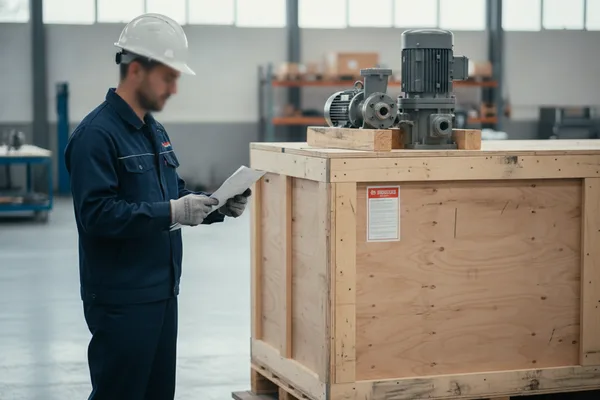
Stores or site teams receive the goods, check quantities against the order and inspect for damage and compliance with the specification. Certificates and documentation are checked at this point, not months later when an auditor asks for them. Any shortfall or defect is raised with the supplier immediately.
Match and pay
Finance pays the supplier only when the purchase order, the goods receipt and the invoice agree, a control known as the three-way match. It prevents paying for goods that never arrived or were priced differently from the order.
Review supplier performance
Finally, record how the supplier performed on quality, on-time delivery, documentation and responsiveness. This record feeds back into step 3 the next time the same item is needed, so good suppliers win more work and weak ones are developed or replaced.
Close the order formally once everything is received and paid. Open orders that are never closed distort budgets, hide committed spend and make it harder to see what is genuinely still outstanding with each supplier.
For international shipments, delivery also needs its own planning. Many buyers obtain freight quotes separately, for example by posting the shipment on the logistics enquiries board, so transport cost and transit time are known before the order is placed.

Other models: 5 stages, the 5 P's and 9 steps
Search for the procurement process and you will find five-step, seven-step, nine-step and even ten-step versions. They describe the same work at different levels of detail.
- Five stages usually group the work as: identify the need, source suppliers, select and negotiate, order and receive, then pay and review.
- Nine steps typically split out activities such as budget approval, contract management and record keeping as steps in their own right.
- The 5 P's or 5 rights are not steps but objectives: buy the right quality, in the right quantity, at the right time, delivered to the right place, at the right price.
Where strategic sourcing fits
Strategic sourcing sits above the transactional process. Rather than handling one purchase at a time, it analyses a whole category of spend, such as all valves or all freight, and decides how it should be bought. That might mean consolidating suppliers, agreeing a framework contract or moving to a different market. The seven steps then run more quickly within the framework that strategic sourcing has set.
For most industrial buyers, the seven-step model is a practical middle ground. It is detailed enough to assign clear owners and outputs, yet simple enough for engineers, site managers and finance teams to follow without training.
Whichever model you adopt, choose one, document it and apply it consistently. The number of steps matters far less than everyone in the organisation following the same sequence.
Procurement best practices for industrial buyers
A few habits separate efficient procurement teams from those that are always firefighting.
- Plan ahead of demand. Link procurement to maintenance and project schedules so long-lead items are ordered early.
- Standardise specifications. Fewer variants of the same item mean better prices and simpler stock control.
- Use competitive quotes above a threshold. Many organisations require three quotations above a set spend level.
- Separate duties. The person who raises a requisition should not also approve the order and the payment.
- Measure total cost. Include freight, duties, inspection, storage and downtime risk, not just unit price.
- Keep records. A clear trail from requisition to payment protects the organisation in audits and disputes.
- Review suppliers regularly. Share performance data with suppliers and agree improvement actions.
- Widen the market when it helps. Publishing requirements on the open enquiries board can bring in qualified suppliers you would not otherwise have found.
If an urgent order keeps bypassing the process, the process is too slow for that item. Fix it with a framework agreement or a stocked spare, not by tolerating exceptions.
Common pitfalls to avoid
The same problems appear again and again. Requisitions arrive with incomplete specifications, so suppliers quote different things. Purchase orders are raised after the goods have already been ordered by phone, which breaks the audit trail. New suppliers are used without any checks because the need is urgent. And supplier performance is never recorded, so the same late or non-compliant supplier keeps winning work on price.
Each of these is fixed by following the steps in order and keeping the records each step is meant to produce.
Digital tools make most of these practices easier. A marketplace that publishes enquiries, collects quotations and records decisions removes much of the manual chasing. To see how this works for industrial and oilfield buyers, read how BSO works.
Frequently asked questions
The seven steps of the procurement process are: identify and approve the need, define the specification, find and qualify suppliers, request quotations, evaluate offers and negotiate, raise the purchase order, and finally receive, inspect, pay and review supplier performance. Each step produces an output, such as an approved requisition or a purchase order, that the next step depends on.
A five-stage model groups the procurement process more broadly: identify the need, source suppliers, select a supplier and negotiate terms, order and receive the goods or services, then pay and review performance. It covers the same work as the seven-step model, but combines specification with need identification and merges quotation and evaluation into a single selection stage.
The 5 P's of procurement, often called the five rights, are objectives rather than steps. They ask the procurement process to secure the right quality, in the right quantity, at the right time, delivered to the right place, at the right price. Balancing all five, rather than focusing on price alone, is what produces the lowest total cost of ownership.
Purchasing is the transactional part of buying: raising a purchase order, receiving goods and paying the invoice. Procurement is the wider process that also includes identifying needs, defining specifications, finding and qualifying suppliers, negotiating, managing contracts and reviewing supplier performance. All purchasing sits inside procurement, but procurement covers much more than purchasing alone.
Strategic sourcing is the planning layer above the day-to-day procurement process. It analyses a whole category of spend, such as valves or freight, to decide how it should be bought over time. Typical outcomes include consolidating suppliers, agreeing framework contracts or entering new supply markets, so that individual purchases then run faster and at a lower total cost.
MRO procurement covers maintenance, repair and operations items, such as spare parts, lubricants, tools, consumables and personal protective equipment. Orders are frequent and often low in value, so an efficient procurement process matters as much as price. Many organisations use framework agreements, catalogues and stocked critical spares to keep MRO buying fast while still controlled.
Try it with a real enquiry
Verified suppliers quote within days. Free for buyers.