

Finding and verifying industrial suppliers means identifying companies that can supply what you need and then confirming, with evidence, that they are legitimate, capable, compliant and financially sound before you place an order. Supplier verification is the evidence-gathering part of that work, and supplier due diligence is the wider assessment of risk that it feeds.
Key facts
- Most buyers find suppliers through verified B2B marketplaces, trade directories, industry events and referrals.
- Verification checks registration, certification, financial health, references and track record.
- Due diligence should be proportionate: deeper checks for critical, high-value or safety-related items.
- A supplier risk assessment scores likelihood and impact across financial, operational, compliance and geographic risk.
- Oilfield and pressure equipment needs material traceability and certificates checked before delivery.
- Verification is not a one-off; approved suppliers should be reviewed regularly.
In summary, to find a reliable industrial supplier, build a long list from verified marketplaces, directories, events and referrals, then shortlist on capability and fit. Before ordering, verify each shortlisted supplier: confirm legal registration, check certificates with the issuing body, review financial stability, speak to references, assess quality and safety systems, and screen for sanctions and ownership risk. Score the result in a simple risk assessment, start with a trial order, and keep monitoring performance after approval.
Where to find industrial suppliers
The best sources depend on what you are buying and how specialised it is. Most procurement teams combine several channels to build a long list of candidates.
B2B marketplaces
Online B2B marketplaces let buyers publish a requirement once and receive responses from many suppliers. The most useful ones for industrial buyers verify suppliers before they can quote and keep a record of every quotation. On BSO, buyers can post an enquiry and receive quotations from verified suppliers, while suppliers can browse the open enquiries board for live requirements.
Trade directories and industry events
National and sector trade directories list manufacturers and distributors by product category. Industry exhibitions and conferences let you see equipment, meet technical staff and judge a supplier's capability in person. Both are useful for specialised items where only a handful of manufacturers exist.
Referrals and existing networks
Colleagues, contractors and other operators are often the fastest route to a proven supplier. A referral is a good starting point, but it is not a substitute for verification. A supplier that served one buyer well may not hold the certification or capacity your requirement needs.
General web searches can surface suppliers too, but treat them with care. A polished website says little about whether a company holds stock, owns a factory or has ever shipped your product type. Use search results to add names to the long list, never as evidence of capability.
Whatever the source, aim for a long list large enough to leave three to five strong candidates after shortlisting.
How to shortlist suppliers
A long list tells you who might be able to supply. A shortlist tells you who is worth verifying in depth. Shortlisting is a quick desk exercise that saves time later by removing poor fits early.
Screen each candidate against a few basic questions:
- Product fit. Do they make or stock the exact specification, size and rating you need?
- Capacity. Can they handle your volumes and delivery schedule alongside their other customers?
- Type of supplier. Are they the manufacturer, an authorised distributor or a trader? Each carries different risks for traceability and warranty.
- Geography. Where will goods ship from, and what does that mean for lead time, freight and import duties?
- Responsiveness. How quickly and clearly did they answer your first enquiry?
Manufacturer, distributor or trader?
Buying direct from the manufacturer usually gives the clearest traceability and warranty, but minimum order quantities and lead times can be higher. Authorised distributors hold stock, offer smaller quantities and still carry manufacturer backing. Traders can find hard-to-source items quickly, yet they add a link to the chain that you must verify carefully, particularly for certified or safety-critical goods.
Responsiveness is an underrated signal. A supplier that takes a week to answer a simple question before you are a customer is unlikely to improve once you have placed an order.
At this stage, a short request for information or an initial quotation request can confirm capability and price range. Our guide to the request for quotation explains how to structure one so that suppliers' answers are directly comparable.
The supplier verification checklist
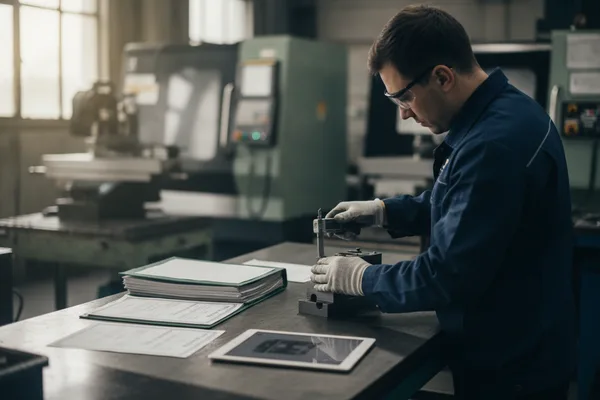
Verification turns claims into evidence. For every shortlisted supplier, collect and check the following. The depth of each check should match the value and criticality of the purchase.
Apply the checklist in tiers. Low-risk, low-value suppliers may need only registration, bank and basic insurance checks. Medium-risk suppliers add certification and references. Critical suppliers complete every line and usually a site or video audit as well. Defining the tiers in advance keeps checks consistent and stops urgent orders from skipping them.
Keep the evidence on file with the date each check was made. Certificates and insurance expire, and an auditor will want to see what you knew at the time of the order.
Supplier due diligence in depth
The checklist covers the minimum. For critical or high-value suppliers, due diligence goes further across four areas.
Financial stability
A supplier that fails halfway through your order can leave you without goods and without your deposit. Look at several years of accounts rather than one, watch for falling revenue or rising debt, and be cautious about large advance payments to suppliers you have not used before. Where an advance is unavoidable, consider staged payments linked to milestones such as material receipt or inspection.
Technical and quality capability
Confirm that the supplier has a working quality management system, not just a certificate on the wall. Ask how they control incoming materials, calibrate equipment, handle non-conformances and keep records. For complex items, a factory visit or a remote video audit reveals far more than a questionnaire.
Compliance and ethics
Screen the company and its owners against sanctions and restricted-party lists, and ask about its anti-bribery, labour and environmental policies. Many buyers now require suppliers to sign a code of conduct and accept the right to audit. Ask, too, about the supplier's own sub-suppliers, because compliance risk often sits one or two tiers further down the chain.
Health, safety and environment
Where the supplier will work on your site or handle hazardous materials, review its safety statistics, training records and permits. A weak safety culture at a supplier becomes your risk the moment its people arrive at your facility.
How to run a supplier risk assessment
A supplier risk assessment brings the evidence together into a decision. It does not need to be complicated. A simple, consistent method applied to every supplier is better than a sophisticated one used occasionally.
- List the risk categories that matter for the purchase, such as financial, quality, delivery, compliance, safety and geographic or political risk.
- Score likelihood and impact for each category, for example on a scale of one to five.
- Multiply to get a risk score and highlight anything above an agreed threshold.
- Decide on mitigation. Options include requesting more evidence, splitting the order between suppliers, requiring inspection before shipment, or using staged payments.
- Record the decision and who approved it.
Review the score whenever circumstances change. A new owner, a sharp fall in on-time delivery, a failed inspection or political instability in the supplier's country should all trigger a fresh assessment rather than waiting for the annual review.
Weight the assessment by criticality. A supplier of office consumables needs little more than registration and bank checks. A supplier of pressure-rated valves for a live well needs the full process.
Start every new supplier with a small trial order, even when the paperwork is perfect. How they handle the first delivery, the documents and the first problem tells you more than any questionnaire.

Special checks for oilfield equipment suppliers
Oilfield and energy equipment carries higher consequences of failure, so verification goes beyond the general checklist.
- Material traceability. Every pressure-containing part should be traceable to a heat number and a material test certificate from the mill or manufacturer.
- Product certification. Equipment should carry the product approvals and licences required by the relevant international standards, and their scope should cover the exact product and size quoted.
- Authorised distribution. If buying through a distributor, ask for evidence that it is authorised by the manufacturer. Unauthorised channels raise the risk of counterfeit or refurbished goods sold as new.
- Inspection and testing. Agree inspection and test plans in advance and consider third-party inspection before shipment for critical items.
- Hazardous area and environmental ratings. Electrical and instrumentation items must hold the correct ratings for the zone where they will be installed.
Agree the documentation package before the order is placed. For critical equipment this often includes material certificates, test reports, inspection release notes, dimensional reports and a certificate of conformity, compiled into a single data book. Requesting it at the end, when the goods are ready to ship, is the most common cause of avoidable delay.
Shipping matters too. Heavy, oversized or dangerous goods need logistics providers with the right equipment and permits. Buyers can request freight quotes alongside the purchase by posting the shipment on the logistics board.
Red flags and ongoing monitoring
Some warning signs should pause any supplier approval until they are explained:
- Registration details that do not match the company name, address or bank account.
- Certificates that cannot be confirmed with the issuing body, or whose scope does not cover the product.
- Requests to pay a personal account or an account in a different country from the company.
- Prices far below every other quotation with no clear explanation.
- Reluctance to share references, allow audits or provide material certificates.
- Frequent changes of company name, ownership or contact details.
None of these signs proves fraud on its own, and a good supplier will usually explain them quickly. What matters is that you ask, record the answer and only proceed once the evidence supports it. Changes to bank details deserve particular care: always confirm them by phone with a known contact before paying, because payment redirection is one of the most common ways buyers lose money.
Ongoing supplier monitoring
Verification does not end at approval. Re-check certificates and insurance before they expire, review performance on quality and delivery after each order, and repeat the full due diligence at regular intervals or whenever ownership changes. Suppliers that pass the process should feed into the wider seven-step procurement process, where their performance is recorded for the next purchase.
A verified marketplace can carry part of this load by checking suppliers before they quote and keeping a history of every enquiry and response. To see how supplier verification, quotations and logistics fit together, read how BSO works.
Frequently asked questions
Most buyers find suppliers through verified B2B marketplaces, national and sector trade directories, industry exhibitions and referrals from colleagues or contractors. Many combine several of these channels to build a long list, then shortlist on product fit, capacity and responsiveness. Learning how to find suppliers is only half the job; each candidate still needs verifying before an order is placed.
Start with a long list from trusted sources, then shortlist suppliers that make or stock your exact specification and can meet your volumes and delivery dates. Verify registration, certification, financial health and references, assess quality and safety systems, and place a small trial order first. A good supplier proves itself through consistent quality, on-time delivery and clear communication.
The best website to find suppliers depends on what you buy. For industrial and oilfield products, look for a B2B marketplace that verifies suppliers before they can quote, lets you post one enquiry to many suppliers and keeps a record of every quotation. General directories are useful for research, but they rarely verify the companies they list.
Define exactly what you need, including specification, quantity and delivery location. Then publish an enquiry or request for quotation to several qualified suppliers, compare their quotations on total cost and lead time, and verify the preferred supplier's registration, certification and references. Agree terms in a purchase order and start with a trial order before committing to larger volumes.
Supplier due diligence is the process of assessing a supplier's legitimacy and risk before and during a business relationship. It covers legal registration, ownership, sanctions screening, certification, financial stability, quality systems, health and safety, and ethical practices. The depth of supplier due diligence should match the value and criticality of what you are buying from them.
A supplier risk assessment scores the likelihood and impact of risks such as financial failure, poor quality, late delivery, non-compliance, safety incidents and geographic disruption. Each category is rated, high scores are flagged, and mitigations such as inspection before shipment, staged payments or a second supplier are agreed. It is a core part of supplier due diligence.
Try it with a real enquiry
Verified suppliers quote within days. Free for buyers.