

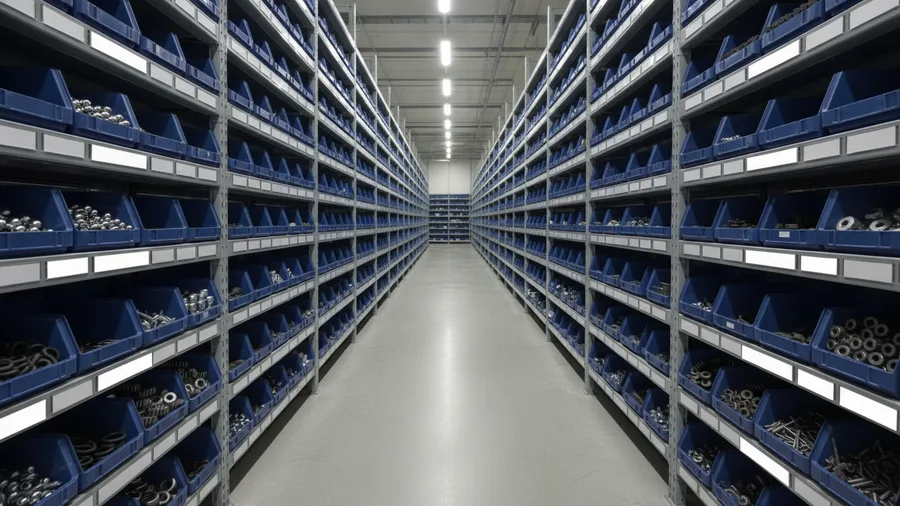
Spare parts logistics is the planning, storage, movement and tracking of the replacement and supply parts that keep machines and plant running, so the right part is in the right place when a repair or planned job needs it. Good logistics management for spare and supply parts balances two costs: the money tied up in stock on the shelf, and the far larger cost of equipment standing idle while a part is found, shipped and cleared.
Key facts
- What it covers: classifying parts, stock and reorder levels, suppliers and stocking locations, packing and shipping, customs, traceability and returns.
- Related terms: MRO logistics covers all the maintenance, repair and operations supplies of a site; service parts logistics is the same work seen from the maker that supports equipment in the field.
- Three main classes: critical spares (failure stops production), consumables (used steadily) and insurance spares (rarely needed, long lead time, costly to be without).
- Core stock rule: reorder point equals usage during the lead time plus safety stock; slow movers are set by criticality and lead time instead.
- Main risks: unreliable lead times, customs delays, missing certificates, wrong or counterfeit parts, and obsolete stock.
- Measures that matter: fill rate from stock, critical stockouts, repair time lost waiting for parts, inventory turns, supplier on time in full and emergency shipments.
In short, decide first which parts matter most, because that drives everything else: how many you hold, where you hold them, which suppliers you use and how fast you ship. Hold critical and insurance spares close to the equipment, let consumables run on simple reorder rules, and plan transport, packaging, customs papers and certificates as part of the purchase rather than after it. Agree an emergency route before you need one, and review a short set of KPIs every month.
What is spare parts logistics?
Every industrial site depends on parts it cannot make itself: bearings, seals, filters, belts, valves, pumps, motors, sensors, control cards and wear parts. Logistics management in supply parts covers their whole path, from the supplier to the store, the workshop and, for repairable items, back to the repairer. It differs from production logistics in three ways:
- Demand is uneven: many parts are used once a year, then suddenly needed today.
- Shortages cost far more than the part: a low-cost seal can stop a whole line.
- The range is wide: thousands of part numbers, mostly slow moving, from suppliers around the world.
Spare parts management is the stock side: what to hold, how many and how the store is run. MRO logistics widens the scope to every supply item a site uses, from lubricants to safety equipment. Service parts logistics is the supplier's view, where an equipment maker supports machines at customer sites. The principles below apply to all three.
Classifying parts: critical, consumable and insurance spares
Classification puts money and attention where a shortage would hurt most. Start with criticality: what happens to safety, the environment, production and quality if this part is not available? Then add usage and lead time.
Many companies combine a usage ranking (ABC, by annual consumption value) with a criticality ranking (VED: vital, essential, desirable). A vital part that is rarely used is an insurance spare; a cheap part used every week is a consumable.
Classification needs clean data: one record per part, a consistent description, the maker's part number, approved alternatives and the equipment it fits. Duplicate records lead to overstock under one number and stockouts under the other.
Stock levels and reorder policy
Once a part is classified, decide how many to hold and when to reorder.
Reorder point and safety stock
For steady usage, the standard rule works well: reorder point = usage during the lead time + safety stock. If a site uses 20 filters a month and the supplier takes six weeks, about 30 are used while the order is on its way. With a safety stock of 10 for late deliveries and busy months, the site reorders at 40. The order then brings stock up to a maximum set by space, shelf life and price breaks.
Safety stock grows with the variability of demand and lead time. A supplier who takes four weeks one time and ten the next forces more stock than one who reliably takes eight.
Slow-moving and critical parts
Formulas break down for parts used once or twice a year. Set the minimum by judgement: how long would an emergency supply take, what would the downtime cost, and how many could fail at once? A bank of identical pumps may justify two spares; a single unit with a long lead time justifies at least one. Review these settings when equipment changes, because stock for retired machines is a common source of obsolete inventory.
Where to hold stock
Options include a central store, satellite stores at the point of use, pools shared between sites, consignment stock the supplier owns until you use it, and supplier-managed stock topped up to agreed levels. Keep critical spares nearest the equipment, and kit the parts for planned overhauls before the job starts.
Storage needs care too: keep parts in original packaging, protect machined surfaces from corrosion, turn the shafts of stored motors and pumps at set intervals to protect the bearings, and issue shelf-life items such as seals, adhesives and batteries first-expired, first-out.
Lead times and supplier location
Lead time sets every stock level, so measure the full time from identifying the need to having the part on the shelf: internal approval and ordering, the supplier's picking or manufacturing, export packing and transit, customs at each border, the last leg to site and receiving inspection. The supplier's quoted delivery is only one part of it.
Supplier location changes the risk. A regional distributor may hold common parts for next-day delivery, while a maker on another continent may be the only source for a specific control board. Compare the landed cost and the reliable lead time, not only the unit price. Our guide on how to find and verify industrial suppliers explains how to check a new source, and a structured request for quotation makes quotes from different regions comparable.
For long-lead critical parts, ask suppliers to hold stock for you under a frame agreement, or to offer an exchange service: a reconditioned unit ships at once and your failed unit goes back for repair.
Transport modes and packaging for parts
Parts range from a few grams to many tonnes, so the mode follows the size, value and urgency of each shipment.
Many buyers split one order: urgent items by air, the rest by sea. Agree the delivery terms, including who books freight, who pays duty and where risk passes, before ordering. Our oilfield services procurement and logistics guide shows how remote sites plan the last leg.
Packaging that protects the part
Transit damage is often found only when the part is needed, so specify packaging in the order:
- Corrosion protection for machined steel: inhibitor film or paper, desiccant and sealed barrier bags for sea freight.
- Anti-static bags for electronic boards and sensors.
- Foam or blocking so the part cannot move in its crate.
- Treated wood: crates and pallets to the international ISPM 15 standard, which many countries require.
- Dangerous goods handling for many batteries, aerosols and gas-filled components.
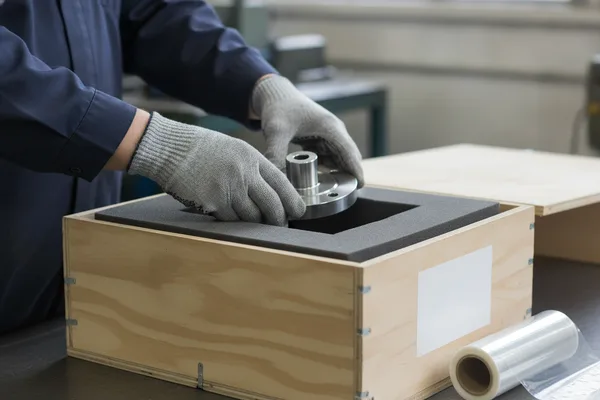
Mark each package with the order number, part number and quantity, and fix the packing list outside the crate so receiving can check it without opening the protection.
Customs and documentation for cross-border parts
Missing or wrong paperwork is a leading cause of avoidable delay at customs. Every international shipment of parts should travel with:
- A commercial invoice describing each item, with its value, currency and delivery terms. Free-of-charge replacements still need a value for customs.
- A packing list with weights, dimensions and the contents of each package.
- The tariff classification (HS code) of each item, agreed with the supplier and forwarder before shipping.
- The country of origin, and a certificate of origin where a trade agreement reduces duty.
- Export licences where needed, because some electronics, valves and pumps fall under dual-use controls.
Plan repairs and returns at export. Many customs systems give duty relief on goods sent abroad for repair and returned, but often only when the right procedure is declared as the part first leaves.
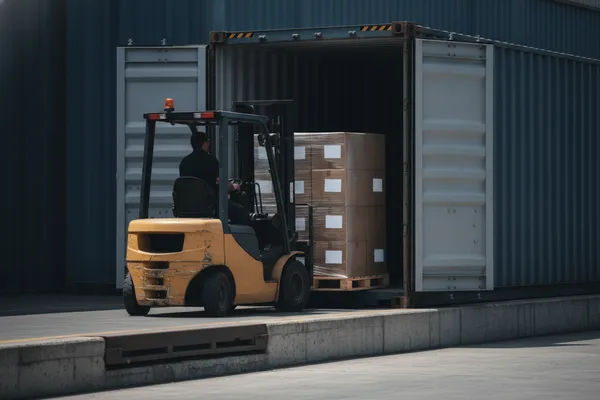
A good forwarder checks documents before the shipment departs. For urgent parts, ask for pre-clearance, so the goods are released on arrival rather than waiting for paperwork.
Traceability and certificates
For many industrial parts, the paperwork is part of the product. A pressure valve without its material certificate, or a lifting component without its test certificate, may not be installed at all. State in the enquiry which documents you need, and check them on receipt:
- A certificate of conformity to the order and the stated standard.
- Material test certificates for pressure and structural parts, traceable to the heat or batch.
- Test and calibration certificates for instruments, lifting equipment and safety devices.
- Serial or batch numbers on the part that match the paperwork, and cure dates for shelf-life items.
Traceable documents are also a key defence against counterfeit and grey-market parts, a real risk for bearings and electronics. Buy from makers, their authorised distributors or verified suppliers with a documented chain back to the maker, and quarantine any part whose markings or papers do not match.
Emergency and AOG-style shipments
In aviation, AOG means aircraft on ground: an aircraft that cannot fly until a part arrives. Industry now uses the term for any top-priority shipment holding up operations, such as a control card for a stopped line. The aim is the fastest safe route, whatever the normal freight cost:
- Next flight out: air cargo on the first available flight, with collection and clearance arranged in parallel.
- On-board courier: a courier carries the part as luggage on a passenger flight, often the fastest option for small parts over long distances.
- Dedicated vehicle: a direct van or truck with no other stops, for regional trips.
- Charter: a dedicated aircraft or vessel for very large or remote cases.
Emergencies go faster when the groundwork is done: forwarders who answer out of hours, pre-agreed rates, documents ready and a clear rule on who approves the spend. Repeat emergencies on the same part mean the stock level, the supplier or the maintenance plan needs to change.
Returns and repairable parts
Many high-value parts, such as pumps, motors, gearboxes and electronic modules, are repaired rather than scrapped. Track each unit through removal, return, repair and back into stock, with an agreed turnaround time. A unit lost in the return loop is stock you have paid for twice.
KPIs for spare parts logistics
A short set of measures, reviewed every month, shows whether stock and service are in balance.
Add stock record accuracy from regular cycle counts, because every other figure depends on the system matching the shelf. Do not judge the store on inventory value alone: cutting stock to hit a target usually returns as stockouts and emergency freight.
How a marketplace platform helps buyers source and ship parts
Sourcing a hard-to-find part often means calling several distributors, chasing quotes by email and arranging freight separately. A marketplace platform puts the part request, supplier quotes, freight quotes and documents in one place. On BSO:
- Buyers submit an enquiry with the part number, specification, quantity, delivery location and required certificates, then either let the BSO team source and consolidate quotes or publish it to verified suppliers and compare their quotes directly.
- Suppliers and distributors browse open enquiries and quote on the parts they can supply.
- Shipping needs go out as logistics enquiries, so freight providers can quote on land, sea and air transport for the same order.
- Companies that need maintenance technicians or storekeepers, and people looking for those roles, can use the jobs board.
Accepted quotes become orders that are paid and tracked on the platform, with the documents kept alongside. Read how BSO works for each step. If you are buying a part by its number, our part-number buying guide shows the checks to make before you order.
Spare parts logistics checklist
- Clean the catalogue: one record per part, with the maker's number and approved alternatives.
- Classify each part as critical, consumable, insurance or non-stock.
- Measure real lead times and set reorder points and minimums from them.
- Decide where each part is held, and kit parts for planned work.
- Specify packaging, transport mode and delivery terms in the order.
- Prepare customs documents and agree tariff codes before shipping.
- Require certificates and serial or batch numbers, and check them on receipt.
- Agree an emergency route in advance, track repairables, and review the KPIs monthly.
Next steps
Spare parts logistics works when stock, suppliers and shipping are planned around what each part is worth to the operation. Start with classification and real lead times, keep the paperwork with the part, and treat every emergency as a signal to improve the plan. For the wider buying cycle, see the procurement process steps. If you supply or ship parts, compare the subscription plans to start quoting on enquiries, and if you have a question about a specific requirement, contact the BSO team.
Frequently asked questions
Spare parts logistics is the planning, storage, transport and tracking of replacement parts for machines and equipment, so the right part reaches the right place when a repair or planned job needs it. It covers which parts to stock and where, reordering, packing and shipping, customs and documents, and returning failed parts for repair. The goal is to keep equipment running at the lowest combined cost of stock and downtime.
MRO stands for maintenance, repair and operations. MRO logistics is the sourcing, storage and delivery of everything a site uses to keep running that is not part of its finished product: spare parts, tools, lubricants, filters, fasteners, safety equipment and other supplies. It applies the same ideas as spare parts logistics to a wider range of items, many of them low in value and bought often.
Spare parts management is mainly about the stock: which parts to hold, how many, when to reorder and how the store is run. Spare parts logistics adds the movement of those parts: sourcing from suppliers, transport, packaging, customs, delivery to the point of use and returns. In practice the two are planned together, because lead times and shipping options decide how much stock you need.
They are third-party providers that store, ship and track parts for equipment makers, service companies and operators. Typical services include holding stock in regional or forward locations close to the equipment, picking and packing orders, express and emergency dispatch, customs clearance, and handling returns and repairs. Using one makes sense when you need fast delivery across many regions without running your own stores there.
Rank each part by criticality, usage and lead time. Stock critical parts, whose failure would stop production or create a safety risk, whenever their lead time is longer than you can afford to wait. Keep consumables on simple reorder levels, and hold one insurance spare for rare, costly failures with very long lead times. Parts with short lead times, or for equipment with a running standby, can usually be bought when needed.
Choose the fastest suitable route: the next flight out, an on-board courier for small parts over long distances, or a dedicated vehicle for regional trips. Send complete documents in advance, including a commercial invoice with a value, a packing list, the tariff code and the country of origin, and ask the broker to pre-clear the shipment so it is released on arrival. Suppliers and forwarders agreed in advance save the most time.
Try it with a real enquiry
Verified suppliers quote within days. Free for buyers.