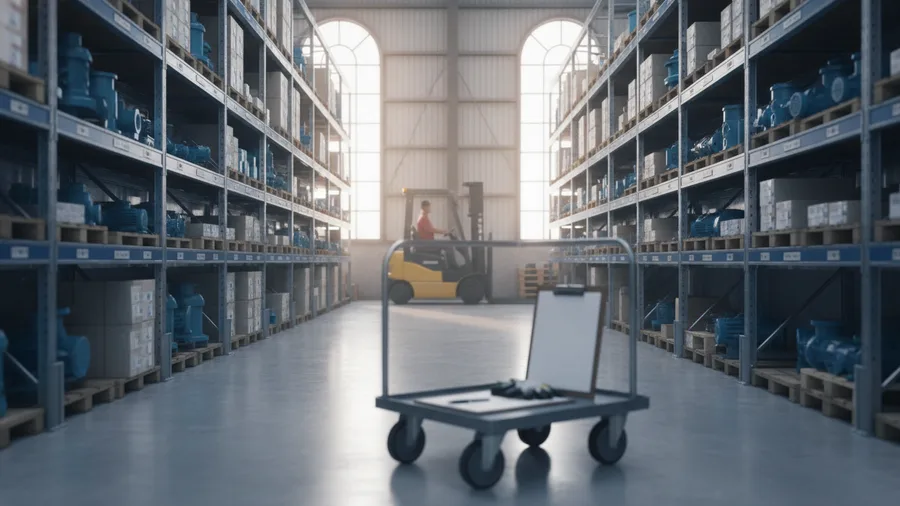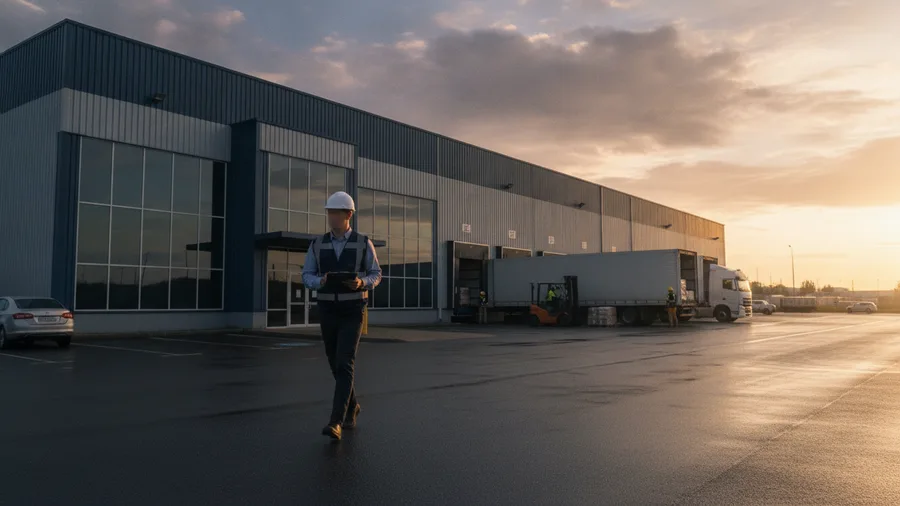


Oilfield services procurement is how oil and gas operators select, contract and manage the specialist companies that drill, complete, test and maintain their wells and facilities, and how they buy the equipment and materials those crews need. It joins three jobs that are often run by different teams: buying services, buying materials, and moving everything to a remote or offshore site safely and on time.
Key facts
- What it covers: well services such as drilling, cementing, wireline and well testing; equipment rental; inspection, maintenance and repair; materials such as tubulars, valves and spare parts; and the freight, customs and site logistics behind them.
- Who buys: operators that hold the licence, drilling and EPC contractors, and service companies buying from their own sub-suppliers.
- How it is contracted: mostly through master service agreements with call-off orders against agreed rates, frame agreements for materials, and spot purchases for urgent needs.
- Logistics: heavy haulage by road, sea freight through a supply base, air freight for urgent spares, and customs clearance, often under temporary import for rental equipment.
- Lead times: from hours for a stocked spare to many months for long-lead items such as wellheads, tubulars and pressure control equipment.
- Contractor checks: HSE record, certifications, equipment condition, crew competence, insurance, local content and financial stability, usually before price is compared.
In short, good oilfield procurement starts with a clear scope of work, prequalifies contractors on safety and capability before comparing prices, and puts most recurring work under a master agreement so crews and equipment can be called off quickly. It treats logistics as part of the purchase, not an afterthought: the delivery route, customs status and lead time of every critical item are agreed before the order is placed, because a rig waiting on equipment can cost far more than the item itself.
What does oilfield services procurement cover?
An oil or gas field runs on a large network of contractors. The operator holds the licence and makes the decisions, but most operators do not own drilling rigs, cementing units or wireline trucks. They buy those capabilities as services, priced per day, per job or per unit of work. Procurement here has three parts that must line up:
- Services: crews and equipment working on site, such as a drilling rig and its crew or a well testing package.
- Materials and equipment: items bought outright, from casing and tubing to valves, wellhead components, chemicals and spares.
- Logistics: moving all of it to the wellsite through ports, borders and remote roads, and bringing rental equipment back.
Upstream, midstream and downstream
Oilfield services usually means upstream work: exploration, drilling, completion and production. Midstream buyers (pipelines, pumping stations, storage) and downstream buyers (refineries, terminals) buy many of the same categories, especially inspection, maintenance and rotating equipment spares. The contracting methods below apply to all three, but logistics is usually hardest upstream, where sites are remote and equipment is heavy.
Main categories of oilfield services
Most operators organise their spend into categories, so that each one has an owner, a contract strategy and a short list of approved contractors. The grouping below is typical, although the names vary between companies.
Materials need their own discipline. Casing and tubing, often called oil country tubular goods, are bought to a stated specification and grade, and each joint should be traceable to its mill certificate. Valves and wellhead equipment are bought to a pressure and temperature rating. A cheaper item without the right certificate may never be allowed into the well.
How oilfield service contracts and call-offs work
Oilfield work is unpredictable: a well runs longer than planned, a pump fails at night, activity follows commodity prices. So the industry uses contracts that let operators call on contractors quickly without negotiating every job from scratch.
Master service agreements
A master service agreement, or MSA, sets the legal and commercial terms once: liability and indemnities, insurance, HSE obligations, payment terms and dispute handling. It usually carries a rate schedule with day rates for crews and equipment, mobilisation charges and unit prices for consumables. On its own it commits neither side to any work.
Work is then ordered through call-off orders, also called work orders or service orders. Each one names the job, location, dates and expected cost under the agreed rates. Because the terms are already signed, a call-off can often be issued within a day. That is why a place on the approved list, with a signed MSA, matters so much to a contractor: without one, it usually cannot be called at short notice.
Common pricing models
- Day rate: the operator pays for time, which suits rigs and standby equipment but leaves the operator carrying the risk of delays.
- Unit rate or per job: a price per stage, run or load, common for cementing, wireline and transport.
- Lump sum: a fixed price for a well-defined scope, such as an inspection campaign.
- Cost plus: actual costs plus an agreed margin, for urgent or poorly defined work.
- Performance based: part of the fee depends on results such as drilling time or uptime, so both sides share risk and reward.
Oilfield service work is highly cyclical, and many contracts are short term and cancellable. Contractors price that risk in, so longer commitments or guaranteed volumes can earn lower rates.
Frame agreements and spot buying
For materials, the equivalent of an MSA is a frame agreement: agreed prices, lead times and delivery terms for a range of items, ordered through call-offs. Some add consignment stock, held by the supplier near the field and paid for only when used. Anything outside an agreement is bought through a request for quotation; our guide to writing an RFQ covers how to get comparable quotes quickly.
How operators tender and evaluate contractors
Large or long-term contracts go through a formal tender. The steps are broadly the same everywhere:
- Define the scope of work: what is needed, where, when, to which standards, and how performance is measured.
- Prequalify: a questionnaire on HSE, quality, capability, insurance and finances; only those that pass go forward.
- Issue the tender: the same scope, terms and pricing template to every shortlisted contractor.
- Evaluate technically: score method, equipment, people and HSE plans before commercial offers are opened.
- Evaluate commercially: compare total cost at realistic activity levels, not headline day rates.
- Award and mobilise: resolve exceptions, sign, and agree a mobilisation plan with inspection points.
The wider sequence, from first need to payment, is in our article on the procurement process for industrial buyers.
What to evaluate
- HSE performance: injury and incident rates over several years, the safety management system, incident investigation and crew training. Many operators treat HSE as a pass or fail gate rather than a score.
- Technical capability: equipment age, condition and certification, key personnel experience, and references for similar wells.
- Quality: a documented quality management system, inspection and test plans, and the certificates due with each delivery.
- Capacity and coverage: enough crews, spares and a regional base to respond within the agreed time.
- Local content and permits: many producing countries require a local share of work, staff or spend, and the right operating licences.
- Commercial strength: rates, payment terms, insurance and financial stability to carry the work to the end.
For a step-by-step method to check documents, references and certifications, see how to find and verify industrial suppliers.
HSE and compliance requirements
Health, safety and environment requirements shape almost every oilfield purchase. A contractor without the right paperwork, or equipment without valid certificates, will normally be turned away at the gate.
- Safety systems: a written safety management system, permit-to-work procedures, job safety analysis and emergency response plans that fit the operator's own.
- People: competence records for each role, such as well control certification for drilling crews and survival training for anyone travelling offshore.
- Equipment: current inspection, load test and pressure test certificates for lifting gear, pressure equipment and hoses, plus maintenance records.
- Hazardous materials: chemicals, explosives for perforating and radioactive sources used in logging tools are subject to strict rules for storage, transport and documentation, including dangerous goods declarations and safety data sheets.
- Environment: waste handling, spill prevention and emissions reporting, which many operators now include in tender scoring.
Requirements differ by country and operator, so put them in the enquiry itself and ask for the documents with the quote, not after the order.
Getting equipment to site: oilfield logistics
Oilfield logistics means moving heavy, high-value and often hazardous equipment to places with few roads, then bringing rental equipment back. Route and mode affect cost, lead time and customs treatment, so decide them when the purchase is planned.
Land transport and heavy haulage
Most onshore equipment travels the last leg by road on flatbed, low-loader or multi-axle trailers. Oversize or overweight loads need permits, a surveyed route and sometimes escorts. Remote access roads can close for weather or seasonal limits, so hauliers should confirm the route and their vehicle certification before the load is ready.
Sea freight and offshore supply
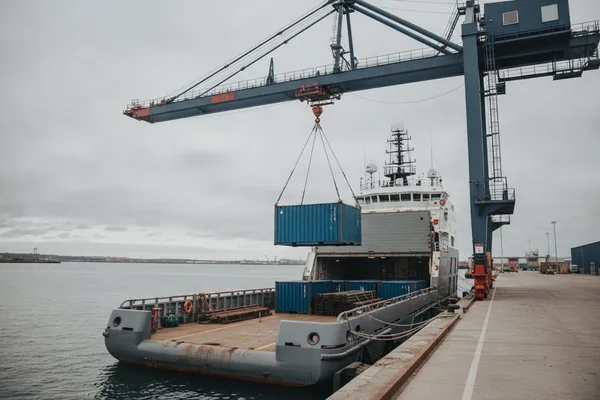
International shipments of tubulars and heavy machinery usually go by sea, in containers or as break-bulk cargo. Offshore cargo is consolidated at an onshore supply base and loaded onto supply vessels in certified offshore containers, baskets and tanks. Every lift needs a manifest and certified lifting gear, and deck space is planned well ahead.
Air freight for urgent spares
When a rig is stopped for want of a part, air freight is often cheaper than waiting, sometimes with a charter or helicopter for the final leg. Many oilfield items are dangerous goods, so confirm with the forwarder that the item can fly before relying on air as the backup.
Customs and documentation
Cross-border shipments need a commercial invoice, a packing list, the correct tariff codes and often a certificate of origin. Rental equipment that will be re-exported is commonly brought in under temporary admission, which suspends duty but requires the equipment to leave within a set period. Agree delivery terms using standard Incoterms rules, so everyone knows who pays freight, insurance and duty and where risk passes. Our logistics enquiries let you ask freight providers to quote on the same route and terms.
Planning for lead times
Long-lead items set the pace of a drilling or maintenance programme. Wellheads and trees, casing and tubing in less common grades, pressure control equipment, large pumps and compressors, and custom valves can take many months to manufacture, inspect and ship, especially when the market is busy.
- Engage early: confirm lead times while the well or project is still being designed.
- Order critical items first: with inspection hold points such as a factory acceptance test.
- Hold critical spares: keep parts whose failure would stop production in stock or on consignment near the field.
- Expedite actively: track progress at the factory and forwarder, not just the promised date.
- Allow for customs and transport: add realistic time for export, shipping, clearance and the last leg.
Weigh every delay against the operation it holds up: a drilling spread waiting a day on equipment usually costs more than any premium for faster freight.
How a procurement platform helps
Much oilfield buying still runs on email, spreadsheets and phone calls, which makes quotes slow to compare and documents easy to lose. A procurement platform keeps the enquiry, the quotes, the documents and the shipping in one place. On BSO:
- Buyers submit an enquiry once, with the specification, quantity, site and required certificates, and verified suppliers quote on the same basis.
- Suppliers and contractors browse open enquiries and quote on the work that matches their capability.
- Freight and haulage needs go out as logistics enquiries, so providers can quote on moving the goods as well.
- Contractors looking for field staff, and people looking for oilfield roles, can use the jobs board.
Read how BSO works for the full flow from enquiry to delivery.
Oilfield services procurement checklist
- Write the scope or specification: location, dates, standards and certificates required.
- Choose the route: a call-off under an MSA or frame agreement, a tender, or a spot RFQ.
- Prequalify on HSE, capability, quality, insurance and local content before price.
- Compare total cost, including mobilisation, standby, freight, duty and delay.
- Agree delivery terms, transport mode and customs status before ordering.
- Track long-lead items, and review contractor performance after each job.
Next steps
Oilfield services procurement rewards preparation. A clear scope, contractors prequalified on safety and capability, master agreements for recurring work and logistics planned with the purchase are what keep wells on schedule. If you are a supplier or contractor serving oil and gas operators, compare the subscription plans to start quoting on enquiries, and if you have a question about a specific requirement, contact the BSO team.
Frequently asked questions
It is the process oil and gas operators use to select, contract and manage the companies that drill, complete, test and maintain their wells, and to buy the equipment, materials and logistics those companies need. It usually combines tendering, master service agreements with call-off orders, contractor prequalification on safety and capability, and planning for freight and customs.
The main groups are drilling and well construction; completion and well intervention, such as wireline and coiled tubing; well testing and production services; equipment rental; inspection, maintenance and repair; materials supply, such as casing, tubing and valves; and logistics and site support, including haulage, supply vessels and camps.
A master service agreement fixes the legal and commercial terms once, including liability, insurance, HSE duties, payment terms and a rate schedule, but it does not commit either side to any work. The operator then issues a call-off order for each job, naming the scope, location, dates and expected cost under the agreed rates, so work can start at short notice.
Most operators prequalify first on HSE performance, quality systems, technical capability, insurance and financial stability, and only then compare prices. Bids are scored technically on method, equipment and people before the commercial offers are opened, and HSE is often a pass or fail gate. References for similar work and valid certificates carry a lot of weight.
Onshore, heavy equipment usually travels the last leg by road on flatbed or low-loader trailers, with permits and a surveyed route for oversize loads. Offshore cargo is consolidated at a supply base and shipped on supply vessels in certified offshore containers. Urgent spares often go by air, and cross-border moves need customs documents and agreed delivery terms.
Complete the operator's prequalification questionnaire with evidence of your safety record, quality system, certifications, insurance and financial standing, and give references for similar work. Register in the countries where you plan to work and meet any local content rules. Quoting accurately and on time against open enquiries, for example on BSO, builds the track record buyers look for.
Try it with a real enquiry
Verified suppliers quote within days. Free for buyers.