
To buy industrial equipment well, you define what the machine must do, choose between new, used and reconditioned, qualify suppliers, compare like-for-like quotes on total cost of ownership, and accept the equipment only after it has been inspected and its documents checked. The purchase price is only part of what a pump, compressor, gearbox or machine tool costs over its life, so the best buy is the one that does the duty reliably, is supported with spares and service, and arrives with the paperwork your site, insurer and regulator expect.
Key facts
- Start with the duty: what the equipment must do, under which conditions, for how many hours a year and to which standards. The model comes later.
- New, used or reconditioned: new for critical, continuous or regulated duty; reconditioned for proven designs with a warranty; used for standby, non-critical or short-term needs after an inspection.
- Qualify before you compare: check that each supplier is genuine, authorised for the brands it sells, financially sound and able to support the equipment where you operate.
- Compare total cost: price plus delivery, installation, energy, spares, maintenance, training and the cost of downtime over the expected life.
- Demand the documents: datasheet, drawings, declaration of conformity, test and material certificates, manuals, a spare parts list and written warranty terms.
- Pay against acceptance: link payments to factory tests, inspection on arrival and successful commissioning on site.
In short, buying industrial equipment is a small project, not a single order. A clear specification makes quotes comparable. Supplier checks keep out sellers who cannot deliver or support what they sell. A total cost comparison stops a low price from hiding high running costs, and inspection, documents and staged payments make sure you receive what you paid for.
Define the requirement and specification
Many poor equipment purchases start with a vague requirement such as "a 50 kW pump" or "a lathe like the old one". Suppliers then quote different things, and the cheapest quote is often the one that left something out. Write down the duty first, then the constraints, then the standards.
- Duty and performance: flow, pressure, speed, capacity, accuracy, cycle time or output, with the normal and maximum operating points.
- Operating conditions: the material handled, temperature, dust, moisture, corrosive or hazardous areas, indoor or outdoor installation, and hours of use per year.
- Utilities and interfaces: supply voltage and frequency, compressed air, cooling water, flange sizes and ratings, control signals and the protocol your control system uses.
- Site constraints: footprint, floor loading, headroom, access route, lifting capacity and noise limits.
- Standards and approvals: the design codes, safety rules and conformity marking that apply where the equipment will be used, plus any customer or insurer requirements.
- Scope of supply: what is included, such as motor, baseplate, guards, control panel, first fill of oil, commissioning spares, installation supervision and training.
Performance or design specification?
A performance specification states what the equipment must achieve and lets suppliers propose how. It widens the field and can bring better solutions. A design specification fixes the make, model or detailed design. That suits like-for-like replacements, spares shared with existing equipment or strict site standards, but it narrows competition. Many buyers combine the two: a performance specification with a short list of required features and preferred components.
New, used or reconditioned: which makes sense
The choice depends on how critical the duty is, how long you need the equipment, your lead time and your budget. Used and reconditioned equipment can be available in days at a lower price, while large or engineered new equipment can take months to build. The table sets out when each option tends to make sense.
"Reconditioned", "refurbished" and "remanufactured" are used loosely. Ask for a written scope: which components were replaced or machined, which tests were run after the rebuild, and what the warranty covers. A cleaned and repainted machine is not a reconditioned one.
What to inspect on used equipment
Inspect used equipment yourself or send an independent inspector before you pay, and prefer a seller who lets you see it running.
- History: running hours or counters, service records, overhaul reports and the reason for sale.
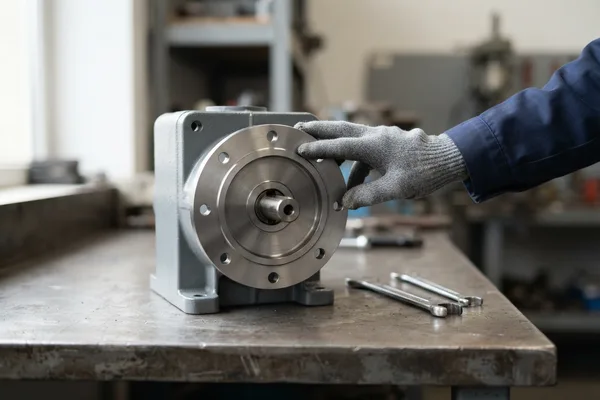
- Wear surfaces: bearings, shafts, gears, slideways, seals, impellers and couplings, looking for scoring, pitting, play and leaks.
- Running test: noise, vibration, temperature and output under load, ideally with readings you can compare with the original datasheet.
- Structure: cracks, corrosion, weld repairs, bent frames and signs of overheating.
- Electrics and controls: insulation condition, the age of the control system and whether software, parameters and backups come with the machine.
- Safety: guards, interlocks and emergency stops. Older equipment may need upgrading to meet current rules before it can be used.
- Ownership and parts: proof that the seller owns the equipment free of any finance claim, and confirmation that spare parts are still available.
Find and qualify suppliers
Industrial equipment suppliers fall into a few groups: manufacturers selling direct, authorised distributors and agents, specialist rebuilders and used-equipment dealers, auction and surplus sellers, and marketplace platforms where buyers post a requirement and several suppliers quote. Each can be the right source. What matters is that you check them before you rely on their price.
- Identity: company registration, trading address, bank details that match the company name, and how long it has traded.
- Authorisation: for branded new equipment, written confirmation that the supplier may sell and support it, which protects the warranty.
- Capability: relevant references, a quality management system, workshop and test facilities for rebuilders, and engineering support for selection.
- Local support: service engineers, spare parts stock and response times where you operate.
- Financial health: large or long-lead orders need a supplier that will still be trading at delivery and through the warranty.
Our guide on how to find and verify industrial suppliers covers these checks in more depth, including warning signs such as pressure to pay quickly or into a personal account.
Get quotes you can compare
Quotes are only comparable when every supplier prices the same thing. Send the same request to each one, with the specification, quantity, delivery location, required date and the commercial terms you want them to follow. Ask each supplier to state:
- the exact model, size and rating offered, with a datasheet;
- a list of deviations from your specification, or a statement that there are none;
- the full scope of supply and what is excluded;
- the delivery term (such as an Incoterms rule), lead time and packing;
- payment terms, price validity, warranty and recommended spares with prices.
Then put the answers side by side in one table before looking at the price. A quote that is low because it leaves out the motor, the control panel or commissioning is not cheaper. Our RFQ guide explains how to write a request that suppliers can price accurately and how to score the replies.
Compare total cost of ownership
Total cost of ownership is the full cost of buying, installing, running and supporting equipment over its expected life. For equipment that runs many hours a year, energy and downtime can outweigh the purchase price by a wide margin.
A simple example shows why this matters. Pump A costs 20,000 and pump B costs 24,000, in any currency. At your operating point, pump B draws 4 kW less. Running 6,000 hours a year at 0.15 per kWh, that saves 4 x 6,000 x 0.15 = 3,600 a year, so the extra 4,000 is recovered in just over a year. Over a ten-year life, the cheaper pump costs about 32,000 more to own. Use your own figures and run the same sum for every quote.
Certifications and documents to demand
Documents prove that equipment meets the specification and the rules where it will be used, and they let your team install, run and maintain it. Agree the list in the request for quotation and make the final payment depend on receiving it.
- Technical: datasheet, general arrangement drawing, wiring and piping diagrams, and performance curves.
- Conformity: the declaration of conformity and marking your market requires (for example CE marking where it applies), plus hazardous-area certification for equipment used in explosive atmospheres.
- Tests and materials: factory performance tests, pressure tests for pressure-containing parts, material certificates traceable to the parts, and calibration certificates for instruments.
- Quality: the manufacturer's or rebuilder's quality management certificate and the inspection records for your order.
- Operation and maintenance: installation, operation and maintenance manuals, a spare parts list with part numbers, and software or parameter backups for controls.
- Commercial: commercial invoice, packing list, certificate of origin where customs need it, and the written warranty.
For used equipment, add proof of ownership, service history and any inspection or overhaul reports. Missing documents can cost more to recreate than the discount was worth.
Inspection and acceptance
Acceptance is the point where you confirm the equipment meets the order. Plan it in stages rather than leaving it to the day the truck arrives.
- Factory acceptance test: for engineered or high-value items, witness the test at the supplier's works, in person or through an independent inspector, against agreed criteria.
- Pre-shipment inspection: check the packing, preservation, markings and documents before dispatch.
- Inspection on arrival: count the packages, look for transport damage and note it on the delivery document before signing.
- Site acceptance and commissioning: run the equipment at its real duty and confirm performance, safety functions and controls.
- Close-out: list any open items, agree dates to clear them and confirm the documents are complete.
Tie payments to these stages: for example, a deposit with the order, the main payment after the factory test or on delivery, and a retention released after commissioning. Suppliers price payment terms into their offer, so agree them at quote stage.
Delivery and installation logistics
Large equipment is more often damaged or delayed between the factory and its foundation than inside the factory. Agree the delivery term so it is clear who arranges transport, who carries the risk at each point and who pays duties. Before dispatch, confirm:
- dimensions, weights, centres of gravity and lifting points for each package;
- export packing suited to the route, such as skids, crates and moisture protection for sea freight;
- customs classification and documents, so the shipment is not held at the border;
- the site access route, unloading equipment and dry storage if the equipment arrives early;
- that foundations, utilities and permits are ready, and who supervises installation.
Our guide to spare parts logistics covers packing and lead times for the smaller items that travel with the main unit.
Warranty and after-sales support
A warranty is only as useful as its terms and the supplier's ability to act on it. Before you order, confirm in writing:
- the warranty period and when it starts, from delivery or from commissioning, with a final end date if commissioning is delayed;
- what is covered and excluded, such as wear parts, misuse and installation by others;
- response times for a breakdown and who pays for travel and labour;
- how long the supplier will supply spare parts, and lead times for critical ones;
- recommended spares for commissioning and the first two years of operation, with prices;
- training for operators and maintenance staff, and who provides service after the warranty ends.
Buy critical spares with the equipment, while prices are known and lead times can run in parallel. A failed seal or bearing that takes weeks to arrive can cost more in lost output than the spare itself.
How a marketplace platform helps
A marketplace platform brings these steps into one place: one requirement, several suppliers, comparable quotes and a record of the decision. On BSO:
- Buyers submit an enquiry with the specification, quantity and delivery location for the equipment they need, then either let the BSO team source and consolidate quotes or publish it to verified suppliers and compare their quotes directly.
- Suppliers browse open enquiries and quote on the requirements that match what they sell.
- Transport needs go out as logistics enquiries, so providers can quote on land, sea and air freight to move the equipment to site.
- Employers looking for installers, maintenance technicians or operators, and people looking for those roles, can use the jobs board.
Depending on your plan, the platform's built-in AI assistant can answer questions about your enquiries and orders and compare the quotes you receive side by side, explaining the differences. The figures come from the quotes themselves, and any change the assistant proposes waits for your approval. Read how BSO works for each step.
Industrial equipment buying checklist
- Write down the duty, operating conditions, site constraints, standards and scope of supply.
- Decide whether new, used or reconditioned suits the duty, the timeline and the budget.
- Check each supplier's identity, authorisation, capability and local support.
- Send the same request to every supplier and ask for deviations in writing.
- Compare total cost of ownership, not only the price.
- Agree the documents, tests and acceptance criteria before you order.
- Plan transport, site access and installation before dispatch.
- Tie payments to acceptance and buy critical spares with the equipment.
Next steps
Buying industrial equipment well comes down to a clear specification, checked suppliers, comparable quotes and acceptance against the order. For the wider buying cycle, see our guide to the procurement process steps. If you sell, rebuild or transport industrial equipment, compare the subscription plans to start quoting on enquiries, and if you have a question about a specific requirement, contact the BSO team.
Frequently asked questions
Define the duty, operating conditions, site constraints and standards first. Then decide between new, used and reconditioned, check each supplier's identity, authorisation and support, and send them all the same request so the quotes are comparable. Compare total cost of ownership, agree documents and tests, plan delivery and installation, and pay against inspection and commissioning.
Buy new for critical, continuous, hazardous or regulated duty and when you need a full warranty. Reconditioned equipment suits proven designs on a tighter budget or timeline, provided a specialist has rebuilt and tested it and offers a warranty. Used equipment sold as is suits standby, short-term or non-critical work after a thorough inspection.
Ask for running hours, service records and the reason for sale. Inspect bearings, shafts, gears, seals and slideways for wear, see the machine running under load, and look for cracks, corrosion and repairs. Check guards and safety functions against current rules, confirm spare parts are still available, and get proof that the seller owns it outright.
Look at manufacturers, authorised distributors, specialist rebuilders and used-equipment dealers, and marketplace platforms where several suppliers quote on one requirement. Then check each one: company registration, matching bank details, references, quality certificates, authorisation for the brands they sell, financial health, and service and spare parts support where you operate.
New equipment is sold by manufacturers and their authorised distributors. Used and reconditioned equipment comes from specialist dealers and rebuilders, auctions and surplus sales, and businesses selling equipment they no longer need. A procurement marketplace lets you post one requirement and receive quotes from several sources, which makes price, condition and lead time easier to compare.
Expect a datasheet and drawings, the declaration of conformity and marking your market requires, factory test and material certificates where relevant, installation, operation and maintenance manuals, a spare parts list with part numbers, control software backups and written warranty terms. For used equipment, also ask for proof of ownership, service history and inspection reports.
Try it with a real enquiry
Verified suppliers quote within days. Free for buyers.