
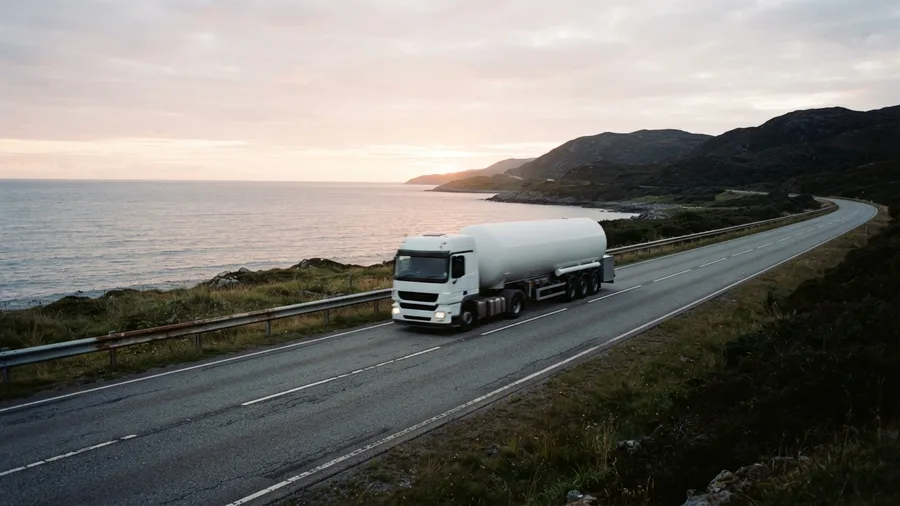
Gas transport logistics is the planning and control of how industrial gases move from production or import terminals to the sites that use them, as bulk liquid in road tankers and ships, as compressed gas in cylinders and tube trailers, and through the handovers to pipelines and storage. Safe and timely gas logistics depends on matching each gas's hazard to the right vehicle or container, controlling loading and unloading, carrying the right documents with trained drivers, planning routes and schedules around risk and holding times, and using tracking and AI to spot problems early.
Key facts
- Three kinds of movement: bulk liquefied gas by road, rail and sea; compressed and liquefied gas in cylinders, bundles and tube trailers; and the interfaces where transport meets pipelines and site storage.
- The hazard sets the rules: flammable, non-flammable and toxic gases, plus oxidising, asphyxiating and very cold properties, decide the packaging, vehicle, segregation and route.
- Containers must be approved and in date: tanks and cylinders need valid inspection and test dates, working relief devices and protected valves.
- Transfers carry the most risk: loading and unloading need checked hoses, the right connection, earthing where relevant and a trained person in attendance.
- Timely means planned: delivery windows, tank levels, driver hours and, for cryogenic liquids, the holding time.
- AI helps, people decide: tracking, sensor alerts, ETA prediction and scheduling tools support trained planners and drivers but do not replace the rules.
In short, moving gas safely and on time is a chain of controls, not a single booking. The gas decides the equipment, the equipment decides the checks, and the checks only work if the documents, people and plans around them are right. Dangerous goods rules differ by country and mode of transport, so check local rules for each movement.
What gas transport logistics covers
Industrial gases include nitrogen, oxygen, argon, carbon dioxide, hydrogen, helium, acetylene, liquefied petroleum gas (LPG) and liquefied natural gas (LNG), plus specialty gases. They move in three main ways.
LNG logistics
LNG is natural gas cooled to about minus 162 degrees Celsius, which shrinks its volume roughly 600 times. Large carriers move it by sea to import terminals, where it is stored and regasified into the pipeline network. A growing share moves onwards by road tanker, tank container or small ship to sites with no pipeline connection. Every stage manages boil-off: heat leaks in, some liquid turns to gas and the pressure rises, so each tank has a limited holding time before gas must be used or vented.
Pipeline and storage interfaces
Road and sea transport usually starts or ends at a fixed installation: a terminal loading bay, an import terminal or a customer's bulk tank feeding the site's pipework. Agree who is responsible on each side of the connection, how quantity and quality are measured at the transfer, and who may operate which valves. Many incidents start where one party's responsibility ends and the other's has not yet begun.
Hazard classes and what they mean for transport
Under the international dangerous goods system, gases form class 2, divided into flammable gases, non-flammable non-toxic gases and toxic gases. Some carry a subsidiary hazard, such as oxidising or corrosive. Each gas has a UN number and a proper shipping name, which drive the packaging, marking, documents and vehicle rules.
- Flammable gases such as hydrogen, LPG, LNG and acetylene: control ignition sources, earth tanks during transfer, ventilate vehicles and keep them apart from oxidisers. LPG is heavier than air and collects in low points.
- Oxidising gases such as oxygen: they make other materials burn far more fiercely. Keep valves and fittings free of oil and grease and segregate them from flammable loads.
- Non-flammable, non-toxic gases such as nitrogen, argon, helium and carbon dioxide: the main risk is asphyxiation. They displace the oxygen in a closed van or room without warning.
- Toxic gases: these need the strictest packaging and leak checks, restricted routes and often a security plan.
The physical state matters as much as the class. Compressed gases are held at high pressure, liquefied gases are kept liquid by pressure, refrigerated liquefied gases are kept liquid by cold and cause cold burns, and acetylene is dissolved in a solvent inside the cylinder. A container approved for one state is rarely approved for another.
Vehicle and container requirements
The vehicle, tank or cylinder must be approved for the specific gas and its state. Before any load, confirm:
- Approval and test dates: tanks, tank containers, tube trailers and cylinders carry periodic test dates. An out-of-date container must not be filled.
- Relief devices and valves: pressure relief valves fitted and in date, emergency shut-off valves working, and valves protected by caps, guards or a cabinet.
- Insulation: cryogenic tanks rely on vacuum insulation; frost on the outer shell signals a loss of vacuum.
- Filling limits: liquefied gases need space to expand, so each tank has a maximum fill. Overfilling can open relief valves or damage the tank.
- Marking and equipment: the placards and markings local rules require, extinguishers, wheel chocks and protective equipment for the gas carried.
- Stability: liquid surges in partly filled tanks, so drivers need tanker handling training.
Moving gas cylinders safely
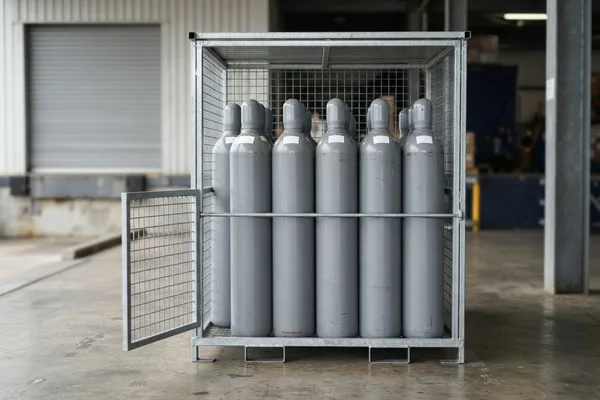
Gas cylinder transport runs from one cylinder in a van to full loads of cylinder pallets. The basics are the same:
- close valves, remove regulators and fit the valve protection before moving a cylinder;
- secure cylinders in a cage, pallet or rack, or strap them so they cannot roll, slide or fall; carry acetylene upright;
- use an open or well-ventilated vehicle and keep cylinders out of the driver's compartment;
- keep flammable gases apart from oxygen and other oxidisers;
- never lift cylinders by the valve; use a cylinder trolley, or a cage and a forklift;
- unload promptly and never leave cylinders in a closed vehicle in the sun.
Small loads are often exempt from some rules below a quantity threshold, but the threshold and the duties that remain vary between countries. Check local rules before treating any load as exempt.
Loading and unloading controls
Transfers are where gas is most likely to escape, so each one follows a written procedure:
- Confirm the product and the receiver: the right gas for the right tank, checked against the order. Mix-ups, such as nitrogen delivered into an oxygen system, have caused deaths.
- Secure the vehicle: engine off where the procedure says so, brakes applied, wheels chocked, and the area free of ignition sources and unauthorised people.
- Check the equipment: hoses and couplings in date and undamaged, the connection type correct for the gas, and earthing connected for flammable products.
- Wear the right protection: face shields and insulated gloves for cryogenic liquids, plus gas detectors where a leak could build up.
- Attend the transfer: a trained person stays in control throughout, watches pressure and level, and can stop it at once.
- Close out: disconnect safely, record the quantity and tank readings, and report any leak or near miss.
At customer sites, agree the access route, a level standing area, delivery hours and who attends, and keep the receiving tank's valves and gauges maintained.
Documentation and driver competence
Dangerous goods documents tell the driver, the receiver and the emergency services what is on board. A typical load carries:
- a transport document with the UN number, proper shipping name, class, number and type of packages, quantity, consignor and consignee;
- written emergency instructions for the driver, in a language they read;
- safety data sheets for the gases carried;
- vehicle, tank and container approval certificates;
- the driver's dangerous goods training certificate where required.
Driver competence goes beyond the certificate. Good carriers add product-specific training, practical assessment on transfers, tanker handling and refreshers, and they manage driving hours, fatigue and site inductions. Ask a carrier how it does each of these, not only whether the paperwork exists.
Route and schedule planning
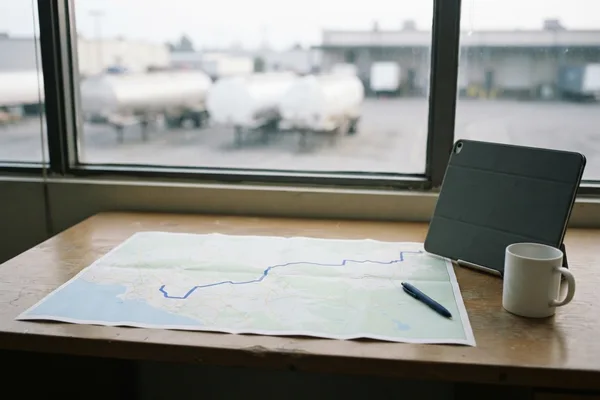
A safe route is not always the shortest. Planners avoid tunnels and dense areas where dangerous goods are restricted, check weight and height limits, allow for weather and roadworks, and choose rest stops where a loaded vehicle is not left unattended in public places.
Timely delivery starts with the customer's stock. Many bulk tanks have telemetry, so the supplier delivers before the level falls too low. For example, a site using 1,500 kg of liquid nitrogen a day, with a carrier that needs two days' notice and one day of safety stock, sets its reorder point at 3 x 1,500 = 4,500 kg. Cylinder users can do the same with counts of full cylinders.
For cryogenic loads, the holding time is part of the schedule. If a tank container has a rated holding time of 20 days and the journey takes 14 days plus 3 days at ports, only 3 days of margin remain. A longer delay means venting, so plan buffers and a fallback before booking.
Where AI and tracking help
Gas logistics produces a steady stream of data: vehicle positions, tank pressures and temperatures, customer tank levels and delivery records. AI and tracking tools turn it into earlier warnings and better plans:
- ETA prediction: live position, traffic and past journeys give realistic arrival times and warn planners before a window is missed.
- Temperature and pressure monitoring: sensors on tanks and containers alert planners when pressure rises faster than expected or insulation fails.
- Route risk: routes are scored for restrictions, weather and accident history.
- Scheduling: forecasts from tank telemetry build delivery runs with fewer emergency trips.
- Driver safety and records: telematics flag harsh braking and fatigue patterns, and reminders track test dates.
The limits matter. Sensors need calibration, every alert needs a named person to act on it, and a model trained on normal days can miss an unusual event. AI supports trained people; it does not change who is accountable. Our guide to AI in petroleum supply chains covers how to start small with data you already have.
Emergency planning
Every gas movement needs a plan for when things go wrong, covering:
- a 24-hour contact who knows the product and can advise the emergency services;
- scenarios for a leak, a fire, a road accident, a breakdown with a full load and a pressure rise in a cryogenic tank;
- the driver's first actions: stop safely, isolate if possible, move people upwind and call for help quoting the UN number;
- a rule that cylinders exposed to fire stay isolated until a specialist clears them, since they can fail after the flames are out;
- regular drills with drivers and customer sites, and reporting of incidents and near misses.
Customers should know their part too: where the isolation valves are, who to call and how to keep people clear.
KPIs for safe and timely gas logistics
Measure safety and service together, so one is not traded for the other.
A rise in reported near misses is often a good sign: people are speaking up.
How to choose a gas carrier
When you hire a gas carrier, you hire its safety system as well as its trucks. Check:
- Scope: the gases, states and modes it is approved to carry.
- Fleet: the type and age of its tankers, containers and cylinder vehicles, with maintenance records.
- People: driver training and assessment records, and how it manages hours and fatigue.
- Safety record: incident and near miss data, and the changes they led to.
- Emergency response and tracking: the 24-hour contact, recent drills and how alerts are handled.
- Insurance and subcontracting: cover suited to dangerous goods, and whether it subcontracts loads.
Write the transport request so carriers can quote like for like: the gas, UN number, state, quantity and packaging, the sites and their access limits, delivery windows, documents and any holding-time limit. Our guide to oilfield services procurement and logistics shows how operators tender and evaluate contractors.
Booking gas transport through a platform
A marketplace platform keeps the request, the quotes and the records in one place. On BSO:
- Transport needs go out as logistics enquiries, with the gas, quantity, route and dates, so providers can quote on moving it by road or sea.
- Buyers who also need the gas itself, cylinders or tanks submit an enquiry, then either let the BSO team source and consolidate quotes or publish it to verified suppliers and compare their quotes directly.
- Suppliers and carriers browse open enquiries and quote on the work that matches their capability.
- Employers looking for drivers with dangerous goods training, tanker loaders or transport planners, and people looking for those roles, can use the jobs board.
Depending on your plan, the platform's built-in AI assistant can answer questions about your enquiries and orders and compare the quotes you receive side by side, explaining the differences. The figures come from the quotes themselves, and any change the assistant proposes waits for your approval. Read how BSO works for each step.
Gas logistics checklist
- Identify each gas, its UN number, class and physical state.
- Check the local dangerous goods rules for every country and mode on the route.
- Confirm the vehicle, tank or cylinders are approved, in date and suitable.
- Agree written loading and unloading procedures with every site.
- Check the documents and driver training before the load leaves.
- Plan the route, delivery windows and, for cryogenic loads, the holding time.
- Set up tracking and alerts with a named person for each alert.
- Test the emergency plan and review the KPIs every month.
Next steps
Safe and timely gas logistics comes down to the right equipment, controlled transfers, competent people and careful planning. For fuel, see our guide to reliable fuel supply. If you carry or supply industrial gases, compare the subscription plans to start quoting on enquiries, and if you have a question about a specific movement, contact the BSO team.
Frequently asked questions
Gas transport logistics is the planning and control of how industrial gases move from production or import terminals to the sites that use them. It covers bulk liquid in road tankers and ships, compressed gas in cylinders and tube trailers, and the handovers to pipelines and storage, with the vehicles, documents, people and schedules each movement needs.
LNG is natural gas cooled to about minus 162 degrees Celsius so that it takes up roughly 600 times less space. Large carriers move it by sea to import terminals, where it is stored and regasified into pipelines. Smaller amounts then travel by road tanker, tank container or small ship to sites without a pipeline, within each tank's holding time.
Close the valves, remove regulators and fit the valve protection first. Secure the cylinders in a cage, pallet or rack so they cannot roll, slide or fall, and carry acetylene upright. Use an open or well-ventilated vehicle, keep cylinders out of the driver's compartment, separate flammable gases from oxygen and unload promptly.
Gas cylinders are dangerous goods, so national and international dangerous goods rules for each mode of transport apply, usually based on the international UN classification. They set packaging, marking, documents, vehicle equipment and driver training. Small loads may be partly exempt below a quantity threshold, but thresholds differ, so check local rules before every movement.
Gases form class 2 of the international dangerous goods system, divided into flammable gases, non-flammable non-toxic gases and toxic gases. Some also carry a subsidiary hazard such as oxidising or corrosive. The physical state, whether compressed, liquefied, refrigerated liquefied or dissolved, adds further controls on the container, vehicle and route.
AI and tracking tools predict arrival times from live position and traffic, raise alerts when tank pressure or temperature moves out of range, score routes for risk, and build delivery schedules from customer tank levels. They need calibrated sensors and a named person for every alert, and they support trained planners and drivers rather than replacing the rules.
Try it with a real enquiry
Verified suppliers quote within days. Free for buyers.