
A reliable fuel supply means an industrial site or remote operation always has fuel of the right grade, in the right quantity and at a predictable cost, with no unplanned run-outs. It rests on four things working together: an accurate demand forecast, the right supply contract, qualified suppliers with a backup in place, and storage and quality controls that keep the fuel usable until it is burned.
Key facts
- What it covers: forecasting, contracts, supplier qualification and backup, delivery, storage, fuel quality, cost control and KPIs.
- Common fuels: diesel and gas oil for generators, plant and vehicles; heating oil and fuel oil for boilers; liquefied petroleum gas; natural gas, piped or trucked.
- Contract types: spot at the day's price, term at a fixed price, or term at a published index plus an agreed differential.
- Core stock rule: days of cover equals usable stock divided by daily use; reorder at the delivery lead time plus a safety margin.
- Main risks: supplier failure or allocation in a shortage, blocked routes, water and microbial contamination, short deliveries, theft and price spikes.
- Measures that matter: days of cover, run-outs, on-time delivery, quality failures, cost against the index and stock losses.
In short, size your demand and storage first, because they decide how often you need deliveries and how much risk a late tanker carries. Buy most of your volume on a term contract with clear specification, measurement and delivery terms, keep a second qualified supplier active, test what arrives and what sits in your tanks, and review a short set of KPIs every month. Check local rules on storage, transport and fuel tax.
What does a reliable fuel supply mean?
Fuel is often a small line in a site budget, yet a run-out stops generators, boilers, plant and vehicles at the same moment. Factories, mines, construction projects, standby generators and remote camps all depend on it, and for many remote sites fuel is the only source of power. A supply is reliable when it passes five tests:
- Availability: fuel arrives before stock falls below a safe level, even in peak seasons and shortages.
- Specification: every delivery meets the agreed grade and the standard that applies where you operate.
- Quantity: you are invoiced for what went into your tank, measured on an agreed basis.
- Cost: the price follows a formula you understand and can budget for.
- Safety: deliveries, storage and handling protect people, equipment and the environment.
Bulk fuel sourcing is the buying side of this work: what to buy, from whom, on what terms and in what quantities. Sites without a gas pipeline can also take compressed or liquefied natural gas by road trailer, sometimes called a virtual pipeline, which raises the same planning questions with specialist equipment on top.
Forecasting fuel demand
Start from the equipment, not just last year's invoices. List every fuel consumer, vehicles and mobile plant included, with its typical use per hour and running hours, then adjust for seasons, shifts and project phases. Compare the result with delivery records: a large gap points to leaks, theft or poor records.
Days of cover and the reorder level
Days of cover is usable stock divided by average daily use. Take a remote site running two generators at about 60 litres an hour each for 20 hours a day, plus mobile plant using 1,200 litres a day: about 3,600 litres a day in total. If the supplier needs three days from order to delivery and the site wants three more days of margin for weather or a late tanker, it reorders when usable stock falls to about 21,600 litres, or six days of cover.
Usable stock is less than the tank's nominal size: allow for the space kept free at the top to prevent overfilling and the volume below the outlet that cannot be drawn off cleanly. Order full tanker loads where you can, since part loads usually cost more per litre.
Planning for remote and seasonal sites
Remote operations need more cover because the route itself is a risk: roads close in wet seasons or winter, and one washed-out bridge can stop deliveries for days. Plan stock for the longest likely interruption and pre-stock before poor-access seasons. Tank level telemetry, which sends readings to buyer and supplier, shows a shortfall coming before anyone finds it at the dipstick.
Fuel supply contract types: spot, term and indexed
The contract decides how much price and supply risk you carry. Most industrial buyers combine more than one type.
In a shortage, contracted customers are usually served before spot buyers. With indexed pricing, the differential covers delivery and margin and is the part you negotiate, so compare suppliers on it, using the same index and averaging period, rather than on one day's delivered price.
What a fuel supply contract should include
- Specification: grade, standard, any biofuel content, and a certificate of quality per batch.
- Volume: expected annual volume, minimum and maximum, and any take-or-pay terms.
- Price formula: index, averaging period, differential, and how taxes and delivery charges are added.
- Delivery: lead time, delivery windows, urgent response times and charges for part loads or out-of-hours drops.
- Measurement: calibrated tanker meter or tank dips, and whether volume is corrected to a standard temperature, often 15 degrees C.
- Quality and claims: retained samples, the test method in a dispute, and who pays after a contaminated delivery.
- Supply security: allocation rules in a shortage and force majeure.
- Commercial terms: payment, credit, duration, price reviews and exit.
Writing these points into a formal tender makes quotes comparable. Our RFQ guide shows how to structure one.
Qualifying bulk fuel suppliers
A bulk fuel supplier may be a refiner's distribution arm, an independent distributor buying from terminals, or a reseller that subcontracts delivery. What matters is how they perform when supply is tight. Check:
- Source: which terminals or depots they load from, and on what terms.
- Distance and fleet: how far the nearest depot is, and whether they run their own tankers.
- Peak capacity: how they handled the last shortage and how they allocate between customers.
- Quality control: certificates, sample retention, tank cleaning and complaint handling.
- Safety: driver training, vehicle inspections, insurance and safety record.
- Billing: meter calibration records and invoice accuracy.
- Finance: trading history, stability and references from similar customers.
Score every supplier on the same criteria and visit the depot before a large contract. Our guide to finding and verifying industrial suppliers covers the document checks.
Building redundancy
One supplier is a single point of failure. Keep a qualified second supplier and give it regular orders, for example 20 to 30 percent of volume, so it treats you as a customer when you need it most. Choose suppliers that load from different terminals where possible. For critical loads, dual-fuel burners or generators add another layer. Write down the emergency plan: who to call, and the stock level that triggers it.
Delivery logistics and safety
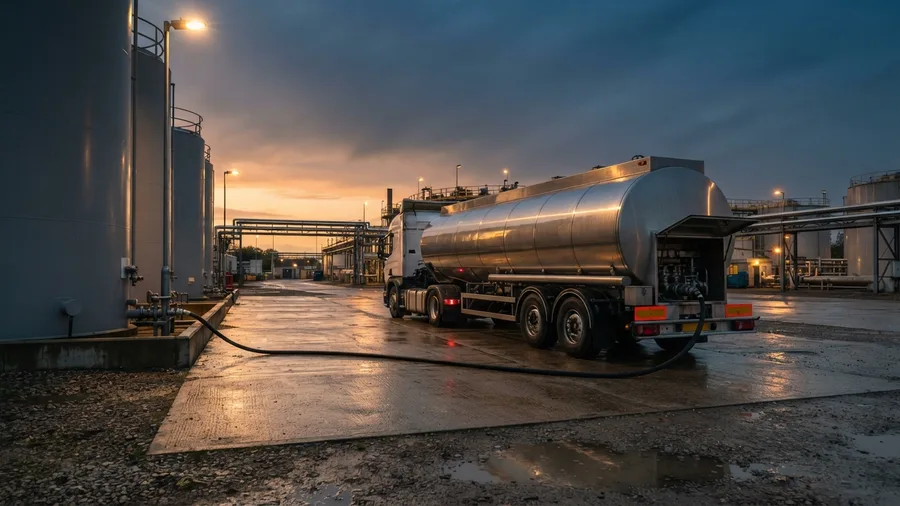
Plan the site for the tanker, not just the tank: route and gate limits on vehicle size and weight, turning space, firm ground at the delivery point, and lighting for early or late drops. A simple routine at each delivery prevents most incidents and disputes:
- Confirm the product, the receiving tank and the space available before connecting the hose.
- Dip or read the tank gauge before and after.
- Check the ticket, meter reading and certificate of quality against the order.
- Keep ignition sources away, keep a spill kit at hand, and have a trained person watch the whole transfer.
- Take, label and keep a sample, and sign the ticket only when quantities agree.
Remote projects may move fuel in tank containers or drums by barge or air, as freight with dangerous goods paperwork; our oilfield logistics and procurement guide covers moving supplies to remote sites. Transport and dangerous goods rules vary, so check local rules.
Fuel quality: contamination, water and testing
Water causes many fuel problems. It enters as condensation when tanks breathe, through poor seals and vents, and sometimes with the delivery. It settles at the bottom, and where it meets the fuel, bacteria and fungi grow into a dark slime that blocks filters and corrodes tanks. Diesel with biofuel content holds more water and ages faster. Rust, sediment and gums from ageing fuel add to it. Warning signs: filters blocking sooner than usual, slime in samples and engines losing power.
Checks at each delivery
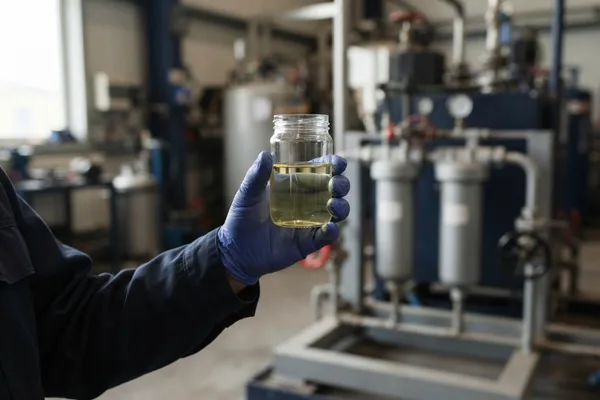
Hold a sample in a clear jar against the light. Good diesel is clear and bright: no haze, no droplets, no sediment. Compare its colour and smell with the last delivery. If in doubt, stop the delivery until the certificate and a retained sample have been checked.
Looking after stored fuel
- Drain water from the tank's lowest point regularly and record the amount; a rising figure points to a leak or poor vent.
- Check for water with water-finding paste on the dipstick, and fit filter and water separators at the outlet.
- Fit breathers that dry incoming air, and keep caps and hatches sealed.
- Use the oldest fuel first. Test standby generator fuel every six to twelve months, and treat or replace it if it fails.
- Consider fuel polishing, a filtration unit that circulates and cleans stored fuel, for large standby stocks.
Storage capacity, tanks and site rules
Storage is the buffer against everything above. More capacity lets you take full loads, ride out delivery gaps and buy more when prices are low, but it ties up cash and space, and fuel held longer carries more quality risk. Size it as the reorder level plus one full delivery.
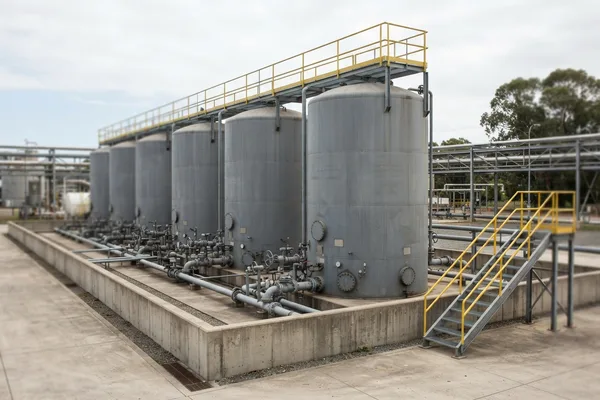
Typical good practice for bulk tanks:
- Secondary containment: a double-skinned tank or a bund, commonly sized for at least 110 percent of the largest tank; local rules decide the exact figure.
- Overfill protection: a level gauge visible from the fill point and a high-level alarm or shut-off.
- Location: away from drains, watercourses and traffic, protected from impact, with safe tanker access.
- Security: locked valves and fill points, and regular reconciliation of deliveries, stock and fuel issued.
- Inspection: regular checks of tanks, pipework, vents, hoses and bunds.
Storage permits and fire separation distances differ between countries and regions, so check local rules before you install or change a tank.
Cost control and hedging basics
A delivered price has four parts: the product price, usually linked to an index; the supplier's differential; taxes and duties; and extras such as part loads and urgent drops. Ask for each part separately so you can compare like for like. To lower the total cost without adding risk:
- Consolidate volume across sites into one tender.
- Order full loads and plan ahead to avoid urgent charges.
- Cut waste: idling, oversized generators at low load, leaks and theft.
- Check invoices monthly against the index, differential and delivery tickets.
Hedging limits the effect of price swings on your budget. The simplest form is fixing the price with your supplier for part of your future volume. Larger buyers may use financial swaps through a bank or broker. Many layer their cover, for example fixing half the expected volume for six months and less further ahead. Hedge only volume you are sure to use, agree the policy with finance, and take specialist advice before using financial instruments.
KPIs for fuel supply
Review them monthly with each supplier.
How a marketplace platform helps buyers compare fuel suppliers
Finding fuel suppliers usually means calls, emails and quotes on different bases. A marketplace platform puts the requirement, the quotes and the documents in one place. On BSO:
- Buyers submit an enquiry with the fuel type and specification, volumes, delivery location and frequency, storage details and required certificates, then either let the BSO team source and consolidate quotes or publish it to verified suppliers and compare their quotes directly.
- Fuel suppliers and distributors browse open enquiries and quote on the requirements they can serve.
- Moving tanks, bowsers or generators to a site can go out as logistics enquiries for transport providers to quote.
- Companies that need tanker drivers or maintenance technicians, and people looking for those roles, can use the jobs board.
Accepted quotes become orders that are paid and tracked on the platform, with the documents kept alongside. Read how BSO works for each step, and for the wider buying cycle see the procurement process steps.
Reliable fuel supply checklist
- Forecast daily use by consumer, season and project phase.
- Work out usable storage, days of cover and the reorder level per tank.
- Choose the contract mix: indexed or fixed term volume, spot for top-ups.
- Write specification, measurement, delivery, quality and shortage terms into the contract.
- Qualify a main supplier and keep a second one active.
- Follow a delivery routine: dips, tickets, certificates, samples.
- Drain water, test stored fuel, and polish or replace it when needed.
- Track the KPIs monthly and review hedging cover with finance.
Next steps
A reliable fuel supply is planned, not just ordered: start from real consumption and usable storage, then set the contracts, suppliers and checks around them. Spare filters and pump parts matter too; our guide to spare parts logistics explains how to keep them in stock. If you supply or deliver fuel, compare the subscription plans to start quoting on enquiries, and if you have a question about a specific requirement, contact the BSO team.
Frequently asked questions
It means fuel of the right grade always arrives before stock falls below a safe level, in the quantity you are invoiced for, at a price set by an agreed formula, and is delivered and stored safely. It depends on an accurate demand forecast, the right contract, qualified suppliers with a backup, and good storage and quality control.
Bulk fuel sourcing is buying fuel in large volumes, usually by the tanker load, for delivery into a site's own storage tanks rather than filling up at retail stations. It covers forecasting demand, choosing contract and pricing terms, selecting and qualifying suppliers, and arranging delivery, measurement and quality checks.
Compare where each supplier loads fuel, how close its depot is to your site, whether it runs its own tankers, and how it performed and allocated fuel in the last shortage. Check certificates of quality, sample retention, meter calibration, safety record, insurance, financial stability and references. Compare prices as an index plus a differential on the same basis, and keep a second supplier active.
It should state the fuel grade and standard, expected volumes with minimums and maximums, and the price formula with its index, averaging period and differential. Add delivery lead times and urgent response times, how volume is measured and temperature corrected, quality certificates and retained samples, claims for contaminated deliveries, allocation rules in a shortage, payment terms, duration and exit terms.
Spot pricing is the supplier's price on the day you order, with no commitment from either side. A term contract sets the supply arrangement for a period, either at one fixed price per litre or at an indexed price: a published market index averaged over an agreed period plus a fixed differential for delivery and margin. Indexed term contracts are the usual basis for steady bulk volumes.
Drain water from the tank's lowest point regularly, keep vents, caps and seals in good condition, and fit breathers that dry incoming air. Use filter and water separators at the outlet, use the oldest fuel first, and test stored fuel every six to twelve months, more often for standby stock held a long time. Polish or replace fuel that fails, and clean the tank when sludge builds up.
Try it with a real enquiry
Verified suppliers quote within days. Free for buyers.