

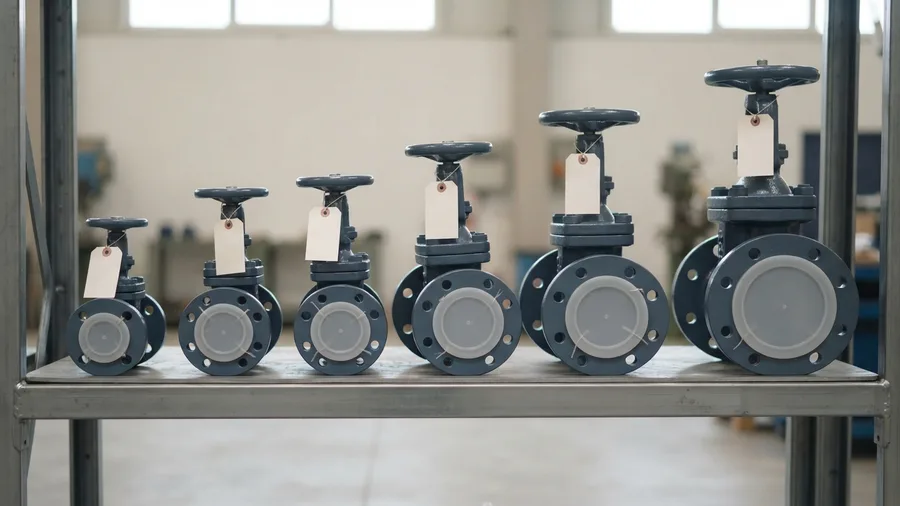
To buy industrial chemicals, valves and spare parts safely, you specify each item exactly, insist on the right safety and quality documents, check that suppliers can deliver what they sell, and compare quotes on the same basis. Chemicals need a grade, a purity, a safety data sheet, suitable packaging and correct transport documents. Valves need a size, pressure class, material, end connection and test records. Spare parts need an exact part number and a traceable origin.
Key facts
- Chemicals by grade and purity: state the grade, minimum assay and impurity limits, and get a certificate of analysis for every batch.
- Safety data first: approve the safety data sheet before the first order, and match labels, packaging and storage to its hazards.
- Hazardous transport is regulated: dangerous goods need the right classification, packaging, marks and documents for each mode. Check local rules.
- Valves by size, class, material and ends: specify the type, nominal size, pressure class, materials, end connection, operation and test standard.
- Spare parts by exact identity: quote the part number, revision and equipment serial number, and require documents that trace the part.
- Compare like with like: send every supplier the same request and compare cost per usable unit, lead time and documents.
In short, a chemical of the wrong grade can spoil a batch, a valve with the wrong rating can leak, and a spare part that only looks right can stop a machine. The fix is the same for all three: a precise request, documents that prove what arrived, qualified suppliers and a fair comparison of quotes.
Specify industrial chemicals by grade and purity
A product name is not a specification. The same chemical is sold in several grades, concentrations and forms, and suppliers quote whatever they stock unless you say otherwise. Write down:
- Identity: the chemical name and its registry (CAS) number, so similar names cannot be confused.
- Grade: such as technical, food, pharmaceutical or reagent grade. Buy the grade the process needs, not the highest available.
- Purity and limits: the minimum assay, for example 99.5 %, and maximum levels for the impurities that matter to you, such as water, iron or chlorides, with the test method.
- Concentration and form: the concentration range for solutions; powder, granules, flakes or pellets for solids.
- Quantity and pack: the annual volume, the delivery size and the pack type your site can handle.
If a supplier offers an "equivalent" product, ask for its safety data sheet and a sample before you approve it. A new source can upset a process even when the main assay is the same, because the impurities differ.
Safety data sheets and certificates of analysis
The safety data sheet (SDS, often still called an MSDS) describes the hazards of the product and how to handle it safely. The certificate of analysis shows that one batch meets the specification. You need both. Ask for the SDS before the first order so your safety team can approve the product, and check that it is the current version for the exact grade and concentration, in the internationally harmonised 16-section format or whatever local rules require, and in your site's language. Keep every SDS where the chemical is used, and ask for new versions when they change.
Packaging, labelling and storage
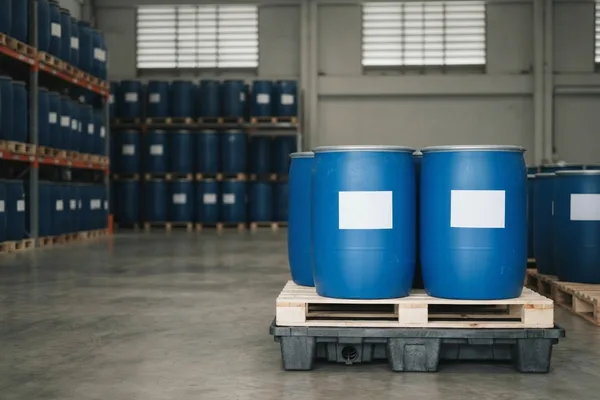
Agree the packaging in the quote, because it affects price, handling and safety. Common options are bags, drums, intermediate bulk containers (IBCs) and bulk tankers. Products classed as dangerous goods need packaging of an approved type that carries the required marks.
- Packaging: the material must suit the chemical, since some products attack metals and others attack plastics, and the pack size must suit your handling equipment.
- Labelling: the product name, the hazard pictograms and statements local rules require, a batch number that matches the certificate of analysis, and the net quantity.
- On delivery: check that seals are intact, nothing is leaking and batch numbers match the paperwork before you sign.
Storage and chemical compatibility
Store each chemical as its SDS describes and keep incompatible groups apart, so a leak cannot mix them. Use bunds or spill pallets that hold the contents of the largest container, ventilate the store and use stock in date order. The table shows common separations; the SDS has the final word.
Compatibility also covers equipment: hoses, gaskets, tank linings and valve materials must resist the chemical at the concentration and temperature you use it.
Hazardous transport documentation
Many industrial chemicals are dangerous goods in transport. Road, rail, sea and air each have their own rules, based on international model regulations but different in detail by mode and region, so check local rules for every leg. Air is usually the strictest, and some products cannot fly at all. Each dangerous product needs:
- Classification: the UN number, proper shipping name, hazard class and packing group, listed in the transport section of the SDS.
- Marks and labels: approved packaging where required, hazard labels on packages and placards on vehicles and containers.
- A transport document: the dangerous goods declaration, signed by a trained person who confirms the goods are classified, packed and marked correctly.
- Emergency information for the driver or crew, and segregation of incompatible products in the vehicle or container.
Agree in the quote who arranges the transport, who prepares the documents and who carries the risk at each point, and check that the carrier accepts the hazard class before you book.
How to specify industrial valves
A valve that is wrong in one detail may not fit the line or may leak at temperature. Start with the job: isolating, regulating or stopping reverse flow. That points to the type.
Then specify:
- Size: the nominal size (DN or NPS) to match the pipe. Size control valves to the flow, not only the line.
- Pressure class: the class or PN rating from your piping specification. The allowable pressure falls as temperature rises, so check the rating at your maximum design temperature.
- Materials: body material, such as cast iron, carbon steel, stainless steel or bronze, plus trim, seat, seal and packing materials, chosen for the fluid, temperature and corrosion.
- End connection: flanged (with the facing, such as raised face or ring joint), butt-weld, socket-weld or threaded, matched exactly to the pipework.
- Operation: lever, handwheel, gearbox or actuator, and for actuated valves the power supply, control signal and fail position.
- Service needs: the shut-off tightness class, fire-safe design for flammable service and low fugitive emissions where needed.
Standards, certificates and testing
Name the design and test standard in your request (your piping specification usually sets it), then ask for documents that prove each valve meets it:
- Material certificates that trace the body and other pressure parts to the heat of material, through the heat number marked on the casting or forging.
- Pressure test records for each valve: a shell test of the body and a seat test of the closure, with pressures, durations and leakage results.
- Marking showing size, pressure class, material, flow direction where it matters, and the serial number.
- Type test and conformity certificates, such as fire-safe tests and the pressure or hazardous-area documents required where the valve is installed. Check local rules.
For critical valves, consider witnessing the factory tests yourself or through an independent inspector. On arrival, check that the marking matches the order and certificates and that the flange faces are undamaged.
Valve spares kits
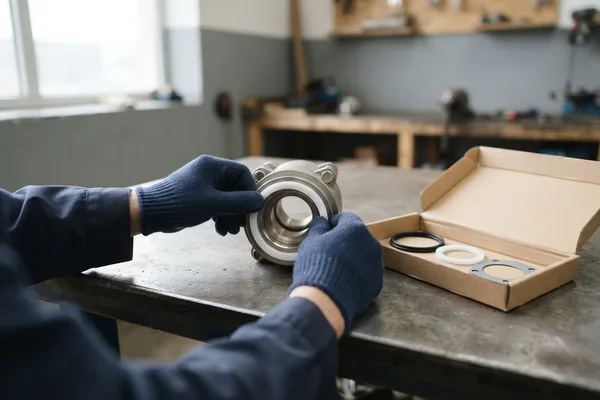
Valves wear at the seats, seals and packing long before the body. Most manufacturers sell spares kits for each model and size: soft goods kits with seats, seals, gaskets and packing; repair kits that add trim parts such as balls, discs or stems; and actuator kits. Order kits by model, size, pressure class and material, quoting the valve's serial number so the supplier can check the build, and buy a first set with the valves. Rubber seals age on the shelf, so store kits sealed, cool and dark.
Identify spare parts exactly
With spare parts, the usual problem is not price but receiving the wrong part. A part that looks the same can differ in material, tolerance or revision. Give the supplier enough to identify it beyond doubt:
- the manufacturer's part number and revision;
- the equipment make, model and serial number, and your asset number;
- the drawing and position number from the parts manual;
- photos of the nameplate and the old part, with key dimensions.
If a supplier offers an equivalent part, ask for written confirmation that it matches form, fit, function and material. For parts that hold pressure, carry loads or protect people, use original parts or alternatives your engineers have approved.
Traceability and counterfeit parts
Traceability means you can show where a part came from and that it is what it claims to be. Ask for a certificate of conformity, material certificates for pressure and structural parts, batch or serial numbers, and original packaging where possible. Buy from manufacturers, their authorised distributors or suppliers who can document the chain back to one of them. Warning signs of counterfeits include a price far below the market, missing documents, mismatched packaging and a seller who will not say where the parts came from. Quarantine doubtful parts until they are inspected. Our guide to spare parts logistics covers which spares to hold and their lead times.
Qualify suppliers across all three
Industrial chemicals suppliers, industrial valves suppliers and spare parts suppliers range from manufacturers to distributors, stockists and traders. Check them before you rely on a quote. Some checks apply to all three:
- Identity: company registration, trading address and bank details in the company's name.
- Quality: a quality management certificate and references from buyers in your industry.
- Source: whether they make the product, are authorised to sell it, or buy from someone who is.
Then add the checks for each group:
- Chemicals: can they supply a current SDS and a certificate of analysis for every batch, keep quality consistent and ship dangerous goods correctly? Repackers should show how they prevent contamination.
- Valves: do they manufacture or only stock, are they authorised for the brands they offer, and can they trace each valve to its certificates?
- Spare parts: can they identify parts from your data and cross-reference superseded part numbers?
Our guide on how to find and verify industrial suppliers covers these checks in more depth.
Compare quotes and lead times
Quotes are only comparable when every supplier prices the same thing. Send each one the same request, and ask them to state the exact grade, model or part number offered, any deviations, the pack size, the delivery term, the lead time and what is included, such as certificates, tests and dangerous goods charges. Our RFQ guide explains how to write a request suppliers can price accurately.
Compare the cost per usable unit
For chemicals, compare the price of the active substance, not the price per tonne of product. Suppose product A is a 48 % solution at 360 per tonne and product B is a 30 % solution at 270 per tonne, in any currency. A costs 360 / 0.48 = 750 per tonne of active substance and B costs 270 / 0.30 = 900, so the dearer product is about 17 % cheaper in use. To receive 100 tonnes of active substance, you also move about 208 tonnes of A but 333 tonnes of B, so freight favours A too. For valves and parts, compare the cost per year of service, including kits and downtime, not only the price per piece.
Plan around lead times
Stock chemicals can arrive in days, but special grades and dangerous goods that need a booked shipping slot can take weeks. Common valves are often in stock, while large sizes, special alloys and valves with witnessed tests are made to order and can take months. Parts for older equipment may have to be made from drawings. Ask for the lead time to your site in writing, order long-lead items first and hold critical spares, so a failure does not wait for a delivery.
How a marketplace platform helps
A marketplace platform brings these steps into one place: one requirement, several suppliers, comparable quotes and a record of the decision. On BSO:
- Buyers submit an enquiry with the grade, valve specification or part number, the quantity and the delivery location, then either let the BSO team source and consolidate quotes or publish it to verified suppliers and compare their quotes directly.
- Suppliers of chemicals, valves and parts browse open enquiries and quote on the requirements that match what they sell.
- Transport needs go out as logistics enquiries, so providers can quote on land, sea and air freight.
- Employers looking for maintenance technicians, valve fitters or storekeepers, and people looking for those roles, can use the jobs board.
Depending on your plan, the platform's built-in AI assistant can answer questions about your enquiries and orders and compare the quotes you receive side by side, explaining the differences. The figures come from the quotes themselves, and any change the assistant proposes waits for your approval. Read how BSO works for each step.
Buying checklist for chemicals, valves and spare parts
- Specify chemicals by identity, grade, purity and pack, and approve the SDS first.
- Agree packaging, labelling and storage with your safety team.
- Confirm the dangerous goods classification and documents for every leg.
- Specify valves by type, size, pressure class, materials, ends and standard.
- Ask for material certificates and test records, and order spares kits with the valves.
- Identify spare parts by part number, revision and serial number.
- Qualify every supplier, then send them all the same request.
- Compare cost per usable unit and lead time, and check every delivery on arrival.
Next steps
Buying industrial chemicals, valves and spare parts well comes down to precise specifications, documents that prove what arrived and suppliers you have checked. For larger items, see how to buy industrial equipment, and for the wider cycle, the procurement process steps. If you supply or transport these goods, compare the subscription plans to start quoting, and for a specific requirement, contact the BSO team.
Frequently asked questions
Specify each item exactly: chemicals by grade, purity and pack, valves by type, size, pressure class, material and end connection, and spare parts by part number and equipment serial number. Get safety data sheets and certificates before you order, qualify each supplier, send them all the same request, and check documents and markings on arrival.
Look for a supplier that provides a current safety data sheet and a certificate of analysis for every batch, keeps quality consistent between batches, and can pack, label and ship dangerous goods correctly. Check its registration, quality certificate, references and source, and whether it makes, distributes or repacks the product.
A safety data sheet describes the hazards of a chemical and how to store, handle, transport and dispose of it safely. A certificate of analysis reports the test results for one batch against its specification, such as purity and impurity levels. You need the safety data sheet before the first order and a certificate of analysis with every batch.
State the valve type and its job, the nominal size, the pressure class or PN rating at your design temperature, the body, trim and seat materials for your fluid, the end connection and how the valve is operated. Add the design and test standard, the tightness class, any fire-safe or emission needs, and the certificates you expect.
Check whether each supplier makes, assembles or only stocks valves, and whether it is authorised for the brands it offers. Ask for material certificates and pressure test records for every valve, references in your industry and a quality certificate. Compare lead times, testing and spares support as well as price, using the same request for all.
Quote the valve model, size, pressure class, materials and serial or tag number, and ask for the matching soft goods or repair kit. If you know the original part number, give it with its revision. Ask for documents that show where the parts come from, store rubber seals sealed and cool, and buy a first set of kits with the valves.
Try it with a real enquiry
Verified suppliers quote within days. Free for buyers.